By IRAS Editorial Team
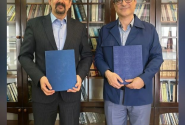
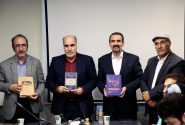
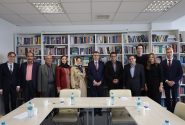
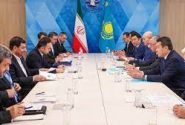
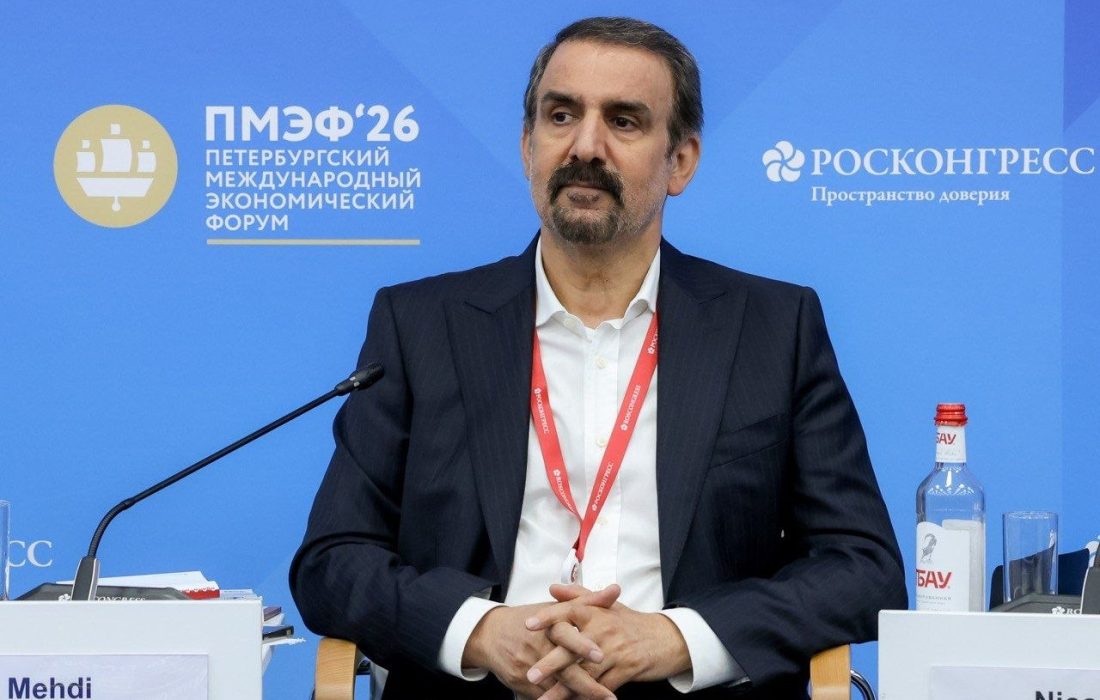
Dr. Mehdi Sanaei, Professor at the University of Tehran and President of the Institute for Iran-Eurasia Studies (IRAS), attended the St. Petersburg International Economic Forum (SPIEF) in June 2026 at the invitation of the Aide to the President of the Russian Federation. During the forum, he addressed a specialized session entitled **“The 3+3 Format on the South Caucasus: Common Challenges and Strategic Partnership,”** hosted by the Primakov National Research Institute of World Economy and International Relations of the Russian Academy of Sciences (IMEMO) and attended by the Deputy Foreign Minister of the Russian Federation. Representatives from the other participating countries of the 3+3 framework—including Türkiye, Azerbaijan, Armenia, and Georgia—also took part in the discussion, which provided an opportunity to assess both the opportunities and the challenges facing this emerging regional mechanism.
Key Points from Dr. Sanaei’s Remarks:
– The establishment of the 3+3 framework is both timely and consistent with the historical realities of the region. The South Caucasus—and the Caucasus in its broader sense—cannot be understood solely through geographical or geopolitical concepts. Rather, it represents a longstanding arena of cultural, historical, traditional, and international interactions that have evolved over centuries. Although the mechanism is institutionally new, it rests upon a deep historical foundation and possesses an inherent regional coherence.
– The framework aligns with two major priorities of the Islamic Republic of Iran’s foreign policy. First, it complements Iran’s **Neighborhood Policy** by strengthening cooperation with neighboring countries, most of which share either land or maritime borders with Iran. Second, it reflects Iran’s broader commitment to regionalism and multilateral regional cooperation, which has become a central pillar of the country’s diplomacy in recent years.
– The participating countries should avoid allowing their bilateral relations to affect the functioning of the framework. While all members possess considerable potential for cooperation, they may also face differences of opinion and conflicting interests. Therefore, it is essential to establish a mechanism that enables all six member states to advance the framework’s activities regardless of fluctuations in their bilateral relationships.
– Political dialogue should now evolve into the implementation of practical cooperative projects, as significant opportunities exist in this regard. Dr. Sanaei also emphasized the importance of Georgia’s participation in the mechanism, noting that the country’s current political orientation enables it to play an active role and contribute meaningfully to the framework.
– Iran maintains constructive relations with all five other participating countries. Nevertheless, the active engagement of every member is essential for the success of the initiative. The third meeting of the foreign ministers is expected to take place in either Armenia or Azerbaijan, with the host country to be determined by the participating neighbors. The Islamic Republic of Iran, however, stands ready to host the next ministerial meeting should the need arise.
– Ongoing tensions and instability in southern Iran are likely to accelerate cooperation within this regional framework. While the Islamic Republic of Iran has effectively defended—and will continue to defend—its territorial integrity, sovereignty, and national security, the crisis in the country’s southern region persists. Consequently, Iran’s northern corridors and connectivity routes have gained increasing strategic importance. Transportation corridors passing through Azerbaijan, Armenia, or Georgia toward Russia are now significantly more important for Iran than in previous years.
– The involvement and intervention of the United States, NATO, and the Israeli regime have neither contributed to the economic development of regional countries nor facilitated the resolution of regional disputes. On the contrary, such interventions have often produced adverse consequences for the region.
– Dr. Sanaei also participated in the closing plenary session of the Forum, attended by Russian President Vladimir Putin. During the session, President Putin made noteworthy remarks regarding the Islamic Republic of Iran’s resilience in the face of military aggression by the United States and Israel.