By: Dr. Mahmoud Shouri, Deputy for Research, Institute for Iran-Eurasia Studies (IRAS)
The 12-day war between Iran and the Zionist regime, regardless of any other considerations, once again revealed a not-so-hidden truth: “In times of war, no one will help Iran.” The Islamic Republic of Iran may have many friends in times of peace, but in times of war, it must rely solely on its internal capabilities, the will of its people, and the bravery of its soldiers. This reality is not unfamiliar in the modern world and the context of contemporary international relations. Many experts and theorists have repeatedly stated that the era of stable alliances and enduring coalitions is over. However, it seems that this truth applies only to countries that choose not to be part of the so-called “Greater West.” When Ukraine is invaded, the “Greater West”—stretching from the United States and Canada to Europe, Australia, South Korea, and Japan—mobilizes all of its military, economic, and political resources to support Ukraine. Even when Israel blatantly violates all principles and foundations of international law by attacking Iran, the Greater West again mobilizes its full capacity to support its ally, Israel.
This pattern is not new in the post-Cold War world. The very countries that supported Saddam Hussein during his aggression against Iran later employed all their power and unity to confront Saddam when he invaded Kuwait. Even in the future, any minor act of aggression against members of the so-called “Greater West” — for instance, a potential Chinese attack on Taiwan — would almost certainly prompt a forceful and coordinated response, justified under the self-ascribed and ideologically charged banner of “defending the free world.”
But on the other side, support is always conditional. It is only in the domain of non-Western countries that alliances and coalitions become meaningless, and legal or moral norms are prioritized over the harsh imperatives of real-world politics. NATO grants itself the authority to determine the terms of war and peace wherever it sees fit—from Iraq and Libya to Afghanistan, Syria, Ukraine, and Taiwan. In contrast, the Shanghai Cooperation Organization does not even possess the authority or capacity to manage peace and conflict among its own members.
Since entering the war in Ukraine and enduring the subsequent wave of harsh Western sanctions, Russia has made significant efforts to theorize the concept of the “ World Majority”—the group of states that have refused to join the West’s sanctions regime—positioning it as a counter-concept to the “Collective West” or “Greater West.” Yet, even Russian strategists at the time emphasized that these countries of the World Majority are united solely in their non-membership in the Collective West and show no signs of normative or political alliance among themselves. The few institutions that have emerged in this space—such as the Shanghai Cooperation Organization and BRICS—still have a long way to go before becoming unified or influential entities.
Turning back to the recent war between Iran and Israel —a conflict which, unlike the war in Ukraine, was acknowledged and condemned by most non-Western countries (or, in the words of Russian analysts, the “World Majority”) as illegal and aggressive—there is a striking observation felt deeply by the Iranian public: the complete absence of any practical or proactive effort by non-Western states, particularly their leading powers, China and Russia, to stop the war or apply political pressure on the Zionist regime to cease its attacks on Iran.
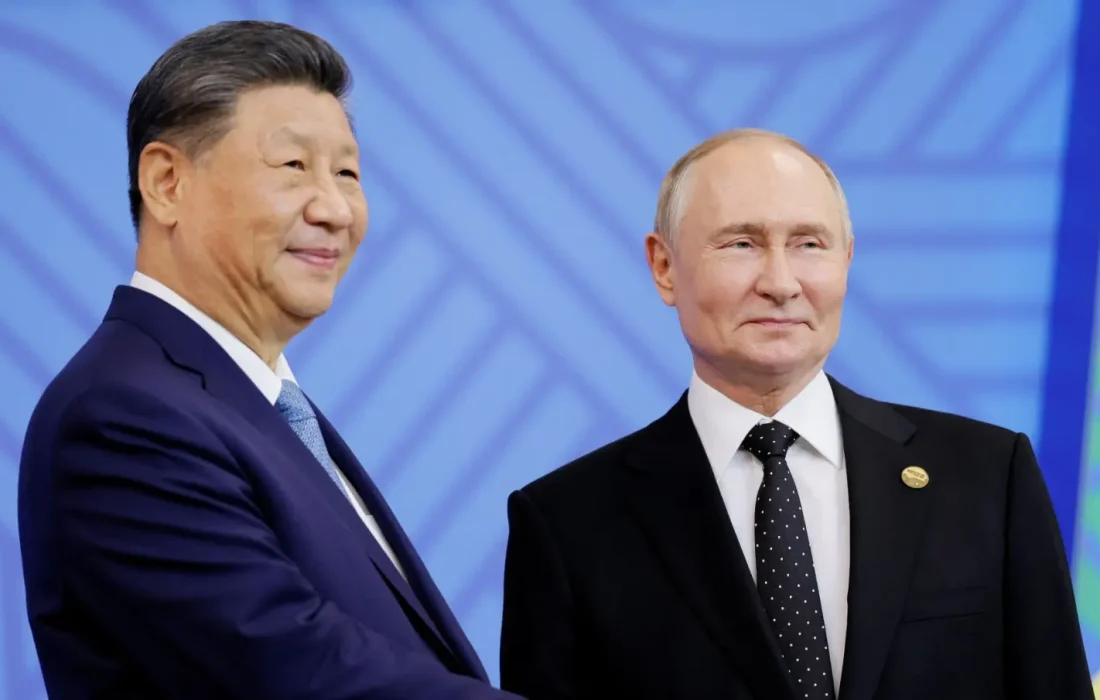
To be realistic, any expectation of military support from China or Russia in this war would be excessive and unrealistic. However, the expectation for an active diplomatic engagement by these powers could not be considered unreasonable. Russia and China did issued condemnatory statements through their foreign ministries immediately after the Israeli strikes began. Russian President Vladimir Putin held phone calls with both the Iranian president and Israeli Prime Minister Netanyahu within hours of the war’s outbreak, condemning the attack on Iran and urging a diplomatic resolution. Russia even expressed readiness to mediate between Iran and Israel. On the sixth day of the war (June 19), during a phone conversation between the presidents of Russia and China, the Chinese side also verbally supported this initiative.
China’s tone in condemning Israel was somewhat milder than that of Russia. A few hours after the war began, the Chinese Ministry of Foreign Affairs released a statement saying, “China is deeply concerned about Israel’s attacks on Iran; we oppose any violation of Iran’s sovereignty, security, and territorial integrity and call for de-escalation in the interest of regional peace and stability.” Chinese President Xi Jinping, for his part, expressed his concern about the outbreak of war for the first time four days after the conflict began.
For a country facing a brutal and illegal act of aggression, any level of political, economic, or even military support may be valuable and significant. In that sense, One cannot deny the significance of the positions taken by China and Russia. Furthermore, it is possible that certain actions were taken behind the scenes that, due to their sensitive nature, all parties preferred to keep confidential. Nevertheless, from the perspective of Iranian public expectations and the nature and extent of the public statements and actions of Chinese and Russian leaders, it would not be unreasonable to conclude that these two powers—despite having signed long-term strategic agreements with Iran—are primarily “friends in times of peace”.
The Iranian public, following the controversy and uproar caused by the West over Iran’s alleged drone shipments to Russia during the Ukraine war—which Russia never denied—as well as the sanctions imposed on the Iranian people solely for this reason and the resulting tensions in Iran-Europe relations, perhaps expected stronger and more effective support from Russia. Although the experience of Russia’s limited response to Israel’s continuous attacks on Iranian-backed forces in Syria remains relatively fresh, in this more decisive and high-stakes conflict, public opinion in Iran anticipated that Russia would go beyond merely issuing diplomatic condemnations—a gesture many other countries also made.
Russia, of course, claims that Iran never requested assistance, and there is little public information regarding any such request. Yet past experiences suggest that even if Russia did not have strategic reservations about supplying military aid to Iran (which it clearly does), the foremost concern for Moscow would be how Iran would pay for such equipment.
The reasons why Russia played the role of a concerned observer with only limited diplomatic engagement in this major regional crisis are manifold. Among the most important—aside from Israel’s special place in Russia’s foreign and regional policy—is the fact that the rationale behind the Iran-Israel conflict is fundamentally incompatible with Russia’s strategic worldview. For Russia, the conflict between Iran and the United States is both comprehensible and, to some extent, desirable. In contrast, the Iran-Israel conflict is neither understandable nor acceptable from Moscow’s perspective. President Putin’s recent statement at the St. Petersburg Economic Forum—that “no country’s security should be guaranteed at the expense of other countries” —was probably aimed not only at Israel but also, implicitly, at Iran. Furthermore, Putin openly stated that, given the presence of nearly two million Russian-speaking individuals in Israel, “today, Israel is almost a Russian-speaking country.” This remark reveals much about the depth and scope of Russia’s considerations in the Iran-Israel conflict. Those familiar with Russian political rhetoric over the past two decades would readily understand the weight of that statement. According to Russia’s strategic policy documents, the protection of Russian-speaking populations worldwide is a top priority, and much of the justification for Russia’s intervention in Ukraine since 2014 has hinged on this principle.
Another noteworthy point is that Russia’s trade volume with Israel is roughly equal to that with Iran, but Israel’s exports to Russia—valued at around $2.5 billion in 2024—are nearly three times greater than Iran’s and include several high-value items for the Russian economy.
Moreover, it cannot be denied that Russia saw certain opportunities in the shifting focus of international attention. A decrease in global concentration on Ukraine, coupled with a redirection of some Western military and economic resources toward Israel instead of Kyiv, may have been perceived by Russia as advantageous. Added to that were possible benefits such as tighter control over Iran’s nuclear program, higher oil prices, and a shift in media coverage from Ukraine to the Middle East—all of which, according to some analysts, may have influenced Russia’s stance during the crisis.
As for China, like Russia, maintaining a balanced and equidistant relationship with both Iran and Israel has been one of Beijing’s strategic priorities in recent years. The Chinese, probably like the Russians, neither understand nor endorse the logic of this confrontation, as it perpetuates uncontrolled instability in the sensitive Middle East region. Nevertheless, unlike Russia, China is more concerned about rising oil prices and potential disruptions to the flow of oil from the Persian Gulf.
Some analysts may disagree with the notion that China played a passive role during the 12-day war between Iran and Israel. They may argue that China’s diplomatic capacity in crisis management was limited or that Beijing saw no compelling reason to adopt a more assertive position. Regardless of the rationale for China’s cautious intervention, it is unlikely that its actions satisfied anyone in Iran—from the public and analysts to political officials.
China and Russia are undoubtedly good and useful friends in times of peace. But in a war—especially one in which the United States or Israel is involved, even if it is a war of aggression and imposition—they are unlikely to provide much help to Iran. This is not merely because they may view Iran as a probable loser in such a war (and thus are unwilling to “bet on a losing horse”), but also because even in a war with no clear winner or loser, they would prefer not to incur costs on Iran’s behalf due to the potential long-term consequences.
Ultimately, it must be understood that within the logic of great powers, they never adjust their policies to suit others; rather, it is the others who must align their policies with the interests of the great powers.