by: Behzad Ahmadi, Faculty Member at the University of Tehran and Member of the IRAS Scientific Council
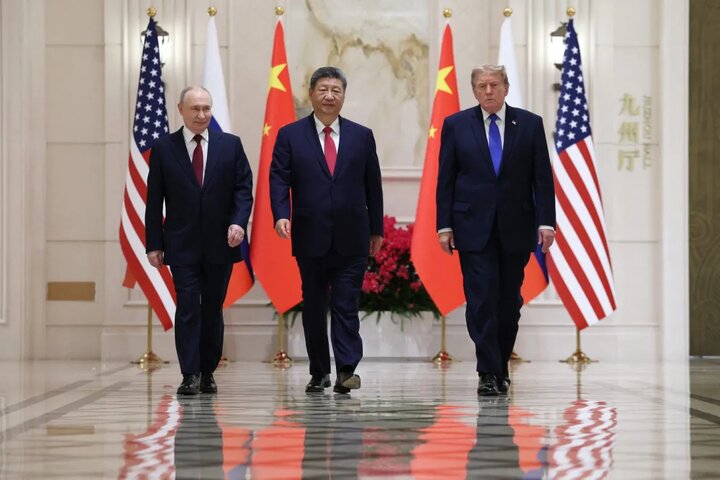
The Shenzhen summit brought the leaders of the United States, China, and Russia together at a time when the prospect of an understanding on Ukraine and Iran was drawing considerable attention. No such understanding emerged, however. Without announcing any specific agreement on either issue, the final declaration emphasized United Nations reform, stable energy flows, the immunity of government officials, and the prevention of nuclear weapons proliferation (The White House, 2026). This agenda reveals both the three powers’ willingness to coordinate on global issues and the questions surrounding the scope and purpose of that coordination. Are they merely seeking to contain shared risks, or could Shenzhen mark a step toward a “concert of great powers,” in which the principal rivals recognize one another’s standing and reach understandings on managing world affairs? The answer depends on their differing expectations of cooperation and their visions of a desirable international order. For Iran, the significance of this development lies in the tension between two possibilities: a decline in American predominance could broaden the country’s options, while coordination among the great powers could restrict some of those same opportunities. The question is how Iran can influence this process and play an effective role in shaping arrangements that affect its security and interests.
To address these questions, Shenzhen must be placed in the context of developments that have eroded the foundations of the post-Cold War order. The decline of American hegemony does not mean the end of American power. It reflects a diminished ability to set the rules unilaterally and secure others’ compliance. China has linked its growing economic and technological strength to demands for a greater role in shaping global affairs, while Russia has drawn on its military and nuclear capabilities to challenge European-backed security arrangements. The war in Ukraine, military aggression against Iran, competition over advanced technologies, and disruptions to trade and energy flows are both drivers of this transformation and manifestations of its costs. Yet the erosion of the old order has not produced agreement on a new set of rules. The major powers have become more capable of frustrating one another’s objectives, but they have reached no lasting understanding on how to govern a world that none can organize alone.
The idea of a concert of great powers responds to this gap between the distribution of power and the absence of agreement on its management. Its underlying logic is that the principal powers, while retaining their rivalries and political differences, can prevent disputes from escalating into a wider confrontation through regular consultation, recognition of one another’s interests, and restraint. The experience of the Concert of Europe after 1815 suggests that sustained cooperation of this kind depends on an understanding of the fundamental arrangements underpinning the order and the limits within which they may change. Today, the erosion of America’s unrivalled predominance likewise makes coordination among centers of power more necessary. Yet the dispersion of economic, technological, and security capabilities means that the management of global affairs cannot be confined to an agreement among three countries. The European Union, India, and Japan possess resources and influence that make their participation in such a mechanism essential (Haass & Kupchan, 2021). In West Asia, too, actors such as Iran, Turkey, and Saudi Arabia can shape the fate of regional arrangements and facilitate or obstruct their implementation. The effectiveness and legitimacy of a concert therefore depend on how coordination among the great powers is linked to the participation of other influential actors and respect for their interests and freedom of choice.
Shenzhen demonstrated the possibility of such cooperation, but it did not resolve disagreements over what that cooperation should mean. From Russia’s perspective, the summit’s principal significance lay in the recognition of Moscow’s standing and the demonstration that the United States no longer holds a monopoly on global leadership. For China, coordination among the powers offers an opportunity to consolidate Beijing’s central role. Yet the image of a world divided among a few powers sits uneasily with its emphasis on sovereign equality and support for the Global South (Da et al., 2026). In the United States, recognition of the need to adapt to a more dispersed distribution of power competes with the view that American primacy can still be maintained and that weakening allies’ confidence would accelerate its decline. Europe’s concern is that it may be excluded from decisions that directly shape its security, although this predicament also reflects the difficulty of translating its economic and technological resources into a common capacity to act on security matters (Hegewisch & Yusupov, 2026).
For Iran, what matters is not simply whether the great powers reach an understanding, but also what that understanding contains and how much influence Iran can exert over its formation and implementation. Iran’s opposition to American hegemony is more clearly defined than its vision of an alternative order or the means by which it might shape that order. Limits on Washington’s ability to impose its will can create opportunities, but entrusting the management of world affairs to a small circle of powers does not necessarily enhance Iran’s freedom of action. Nor is Iran a passive object of great-power relations: its defense capabilities, geographical position, and regional ties can alter others’ calculations. The ability to influence developments, however, is not the same as the ability to help set the rules. Converting the former into the latter requires economic, technological, diplomatic, and institutional capacity alongside deterrence.
Part of Iran’s ability to influence future arrangements depends on how it manages its relations with China and Russia. These relationships can mitigate American pressure and broaden Iran’s economic and diplomatic options, but making effective use of them requires an understanding of the limits of its partners’ support. Beijing’s and Moscow’s opposition to an American monopoly on influence does not necessarily imply support for all of Iran’s regional objectives. For China, economic relations with Arab countries and stable trade and energy flows have an importance of their own. Russia, too, manages its relations with Tehran within the context of its regional ties and its wider competition with the West. Their support for Iran in the face of American pressure can therefore coexist with calls for restraint from Tehran and efforts to contain the crisis. Both countries’ votes in favor of UN Security Council Resolution 1929 also demonstrate that political closeness does not rule out their joining efforts to pressure Iran, although that precedent alone cannot predict their future behavior (United Nations Security Council, 2010). Strengthening Iran’s agency in these relationships thus depends on translating shared political positions into concrete forms of cooperation that both sides have an interest in sustaining.
From Tehran’s perspective, the absence of any announced agreement specifically on Iran is a favorable outcome, particularly given concerns that the three powers might take decisions in its absence. This outcome can be associated with Iran’s role and capacity to influence events, as well as the difficulty of implementing arrangements without its participation, although the three powers’ divergent interests must also be considered. Nevertheless, the fact that Iran is not named in the declaration does not mean its provisions are irrelevant to the country’s interests. They identify areas of coordination that could affect Iran’s position even without an explicit agreement concerning it.
On energy, the commitment to increase the production and supply of petroleum products and maintain stable energy flows could reduce the vulnerability of consuming countries, making the global costs of continued sanctions and the United States’ unlawful blockade of Iran more bearable for them (The White House, 2026). This possible consequence is not, of course, the declaration’s stated objective, and increased supply is no substitute for secure transport routes. Conversely, concern over widespread disruption to energy markets could encourage efforts to contain the war and ease tensions, especially on China’s part, given the connection between stable energy imports and its economic interests. This objective could, however, be pursued through pressure on Iran, or it could create an opening for a reciprocal agreement to resolve the crisis. This is where Iran’s relations with its partners become especially relevant: Tehran needs to connect their interest in energy stability to support for arrangements that simultaneously address regional security, Iran’s access to markets, and the easing of economic pressure.
On the nuclear issue, the basis for convergence among the three powers is clearer. China and Russia oppose Iran’s acquisition of nuclear weapons. Their reasons include preserving the non-proliferation regime, preventing a regional arms race, averting war, and maintaining the position of the existing nuclear powers. Domestic calls in Iran to build a bomb therefore conflict with a fundamental premise of both partners’ policies, and practical steps in that direction could provoke a response from them as well. Opposition to the weaponization of Iran’s nuclear program does not, however, necessarily mean that they endorse American sanctions or military aggression. This distinction creates an opening for diplomatic initiative. Iran can address proliferation concerns through an agreement that includes reciprocal commitments concerning the easing of pressure, the country’s security, and its nuclear rights.
The provision concerning the International Criminal Court also matters to Iran. The three powers’ emphasis on officials’ immunity does not automatically alter the Court’s jurisdiction, but it could strengthen political support for efforts to pressure it. Such a development could make it more difficult to pursue criminal accountability for Israeli and American officials over war crimes, including the attacks on the schools in Minab and Lamerd. Iran’s interest in preserving avenues for legal accountability therefore does not necessarily align with the preferences of the great powers. Pursuing that interest requires documentation and independent legal diplomacy.
Ultimately, the Shenzhen summit points less to the establishment of a new order than to the need for the great powers to manage the transition. The United States continues to seek to preserve its primacy, China wants a role commensurate with its global weight, and Russia insists on recognition of its standing in shaping security arrangements. Their limited understandings on certain shared risks have yet to become an agreement on the rules of a future order. The dispersion of power at the regional level also limits their ability to decide on and implement arrangements without the participation of other actors. For the Islamic Republic of Iran, the absence of any announced agreement specifically concerning the country is a favorable outcome in light of concerns about decisions being taken by the three powers without Tehran. This outcome can be linked both to Iran’s capacity to influence events and to the parties’ divergent interests. Yet the provisions on energy, non-proliferation, and officials’ immunity show that even general coordination among the powers can affect Iran’s interests. In these circumstances, consolidating the gains secured through Iran’s defense efforts requires diplomatic initiative, stronger economic foundations, and cooperation with others alongside deterrence. Relations with China and Russia will underpin the country’s freedom of action when they rest on an understanding of mutual interests and the translation of shared political positions into lasting cooperation.
References
Da, W., Shao, Y., & Zhao, L. (2026, November 10). Shenzhen is not Yalta: Rethinking China–U.S.–Russia relations. China–US Focus. https://www.chinausfocus.com/foreign-policy/shenzhen-is-not-yalta-rethinking-china-us-russia-relations
Haass, R., & Kupchan, C. A. (2021, March 25). A concert of powers for a global era. Council on Foreign Relations. https://www.cfr.org/articles/concert-powers-global-era
Hegewisch, N., & Yusupov, A. (2026, November 19). Die Großen Zweieinhalb. IPG Journal. https://www.ipg-journal.de/regionen/global/artikel/die-grossen-zweieinhalb-9432/
The White House. (2026, November 19). U.S.–Russia–China heads of state declaration toward peace. https://www.whitehouse.gov/briefings-statements/2026/11/u-s-russia-china-heads-of-state-declaration-toward-peace/
United Nations Security Council. (2010, June 9). Resolution 1929 (2010) (S/RES/1929). https://docs.un.org/en/S/RES/1929