News
 The United Nations at a Crossroads: Legitimacy and Power in an Emerging Multipolar Order
Delegation of the Institute for Iran &Eurasia Studies Visited RIAC
The Strong Developmental State: A Review of Seyfodini’s Theory of Iranian Statecraft
Bagram Airfield: Central Asian Security Dynamics and Great Power Rivalry
Iranian Studies in Armenia: Challenges and Future Prospects
The United Nations at a Crossroads: Legitimacy and Power in an Emerging Multipolar Order
Delegation of the Institute for Iran &Eurasia Studies Visited RIAC
The Strong Developmental State: A Review of Seyfodini’s Theory of Iranian Statecraft
Bagram Airfield: Central Asian Security Dynamics and Great Power Rivalry
Iranian Studies in Armenia: Challenges and Future Prospects
Caucasus
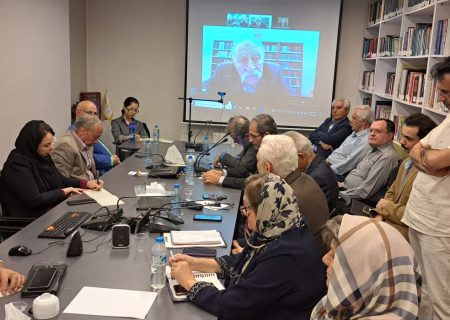
Iranian Studies in Armenia: Challenges and Future Prospects
The relationship between Iran and Armenia is both historical and emotional


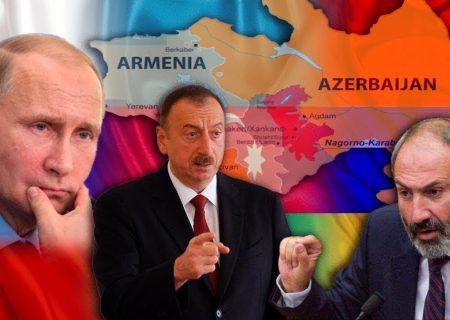
Why has Russia questionably preferred to remain silent regarding revival of Azerbaijan’s sovereignty in qarabag?
the consequences of Ukraine war mitigating Russian monopolistic and hegemonic positions in Caucasus have created the vacuums in the region which are being filled by the new extra regional countries including Turkey and China.

The complex web of interdependence and threat balancing that prevents war between Iran and Azerbaijan
espite the mutual threat perceptions, the recurring tensions between the two countries have not gotten out of control and led to military conflict. In fact, over the past three decades, relations between Tehran and Baku have consistently followed a cycle of escalating and de-escalating tensions.
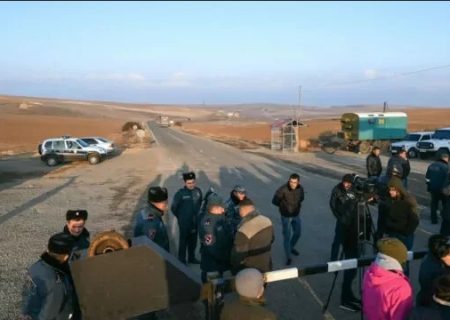
Iran Not Opposed to Deployment of EU Monitoring Mission Along Armenian-Azerbaijani Border
Tehran’s position on the EU mission is important for a number of reasons. First, following the collapse of the Soviet Union and throughout the past three decades, traditionally, Iran has opposed the intervention of extra-regional forces, especially the North Atlantic Treaty Organization, EU and United States, in the regional conflicts of the South Caucasus.
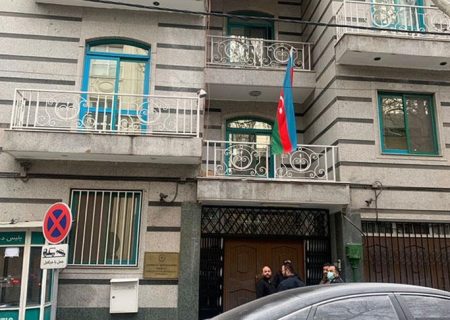
Republic of Azerbaijan Embassy Incident; an Engineered Scenario or Surfing on an Accident?
Strategic Council Online – Opinion: The tragic and criminal incident at the embassy of the Republic of Azerbaijan in Tehran, which based on the explicit confession of the assailant, took place with personal motives, ended with the timely intervention of the police force.
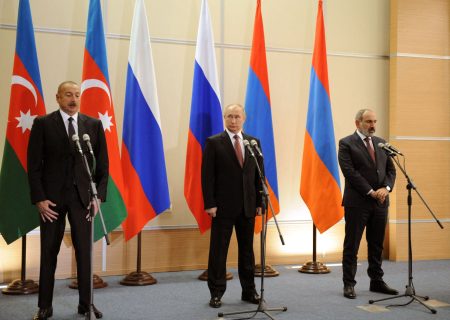
An Analysis of Armenia Not Welcoming Tripartite Negotiations
Strategic Council Online – Interview: An expert on Caucasus affairs said: Armenia is angry with Russia over its failure to give a quick and decisive response regarding the lifting of the blockage of the Lachin Corridor, and by not welcoming tripartite negotiations, it intends to show its dissatisfaction, but this action will not help to improve the situation and enables the Republic of Azerbaijan to find the possibility for more movement.
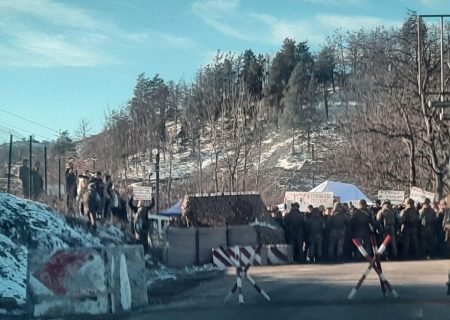
The causes and consequences of blocking the Lachin corridor
Strategic Council Online—Interview: Emphasizing that the Republic of Azerbaijan and Armenia should respect each other’s territorial integrity and observe international standards, an expert on international issues said that what happened with the blocking of Lachin corridor is against the standards of international law. The Republic of Azerbaijan should be demanded to cancel the restrictions and at the same time clarify the ambiguities of the Moscow Agreement, which was signed with the presence of Russia and between Armenia and the Republic of Azerbaijan, otherwise there is always the possibility of conflicts and disputes.
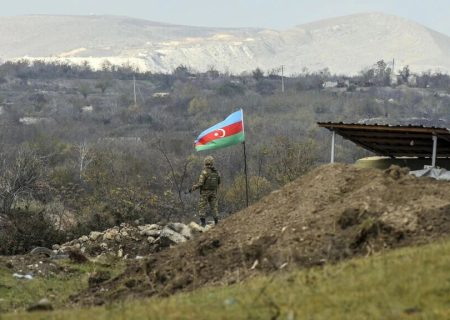
Strategic consequences of attempting unacceptable border changes in the South Caucasus
Strategic Council Online–Opinion: Baku claims based on paragraph 9 of the tripartite agreement that was clinched after the second Karabakh war on November 10, 2020, the right was given to the government of Baku to build through the territory of Armenia an exclusive “corridor” under Azerbaijan’s sovereignty to Nakhchivan. Hamid Khoshayand—Expert of regional issues

Iran and Eurasian Economic Union Negotiations: Upgrading EAEU-Iran Preferential Trade Agreement into a Free Trade Agreement
The Treaty on the Eurasian Economic Union (EAEU) was signed on 29 May 2014 by the leaders of Belarus, Kazakhstan, and Russia, and came into force on 1 January 2015. Treaties for Armenia's and Kyrgyzstan's accession to the EAEU were signed on 9 October and 23 December 2014, respectively.