According to Sanaei: “Our country possesses a remarkable history and heritage. Throughout crises and hardships, this legacy has demonstrated how effectively it can help the nation navigate adversity. However, we must not take an episodic view of this matter. The idea of ‘Iran for all Iranians’—building Iran’s future, revitalizing its economy, and overcoming the challenges and tribulations confronting the country—must be placed before us as an active agenda.”
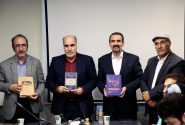
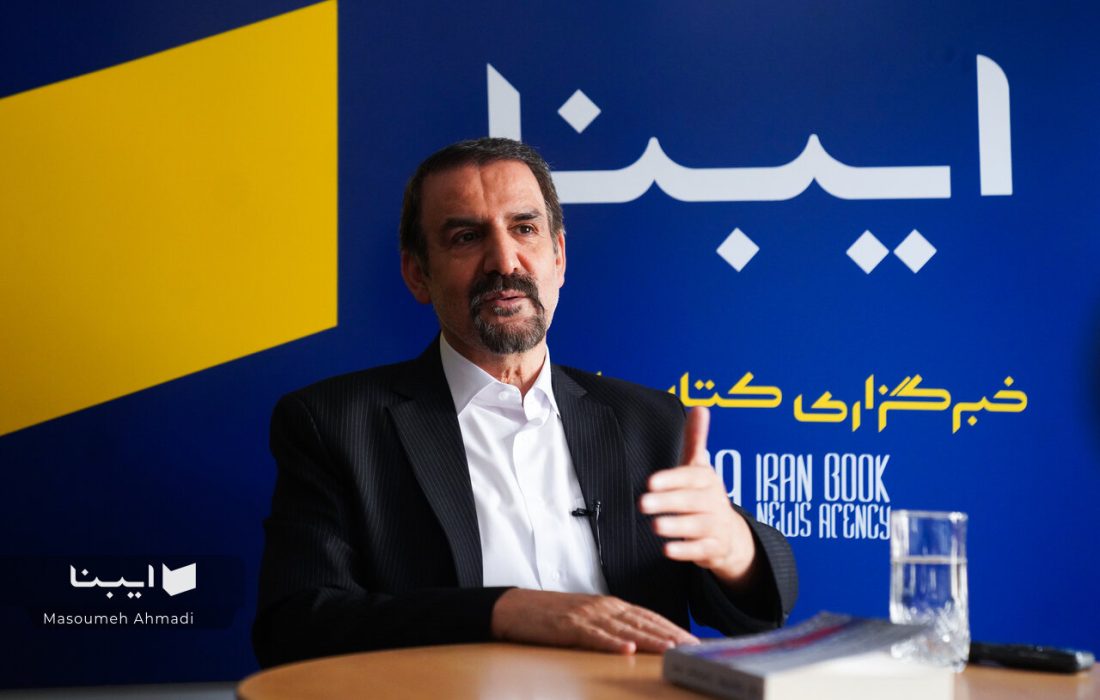
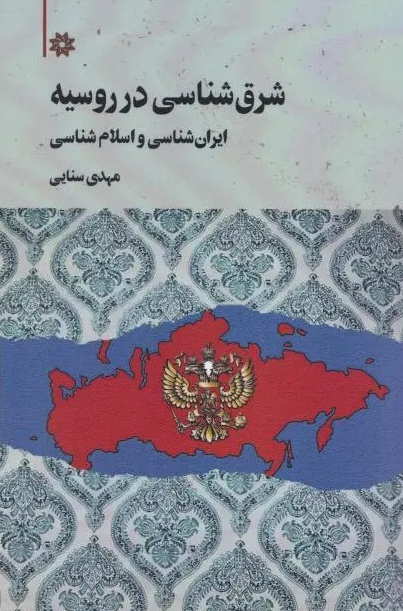
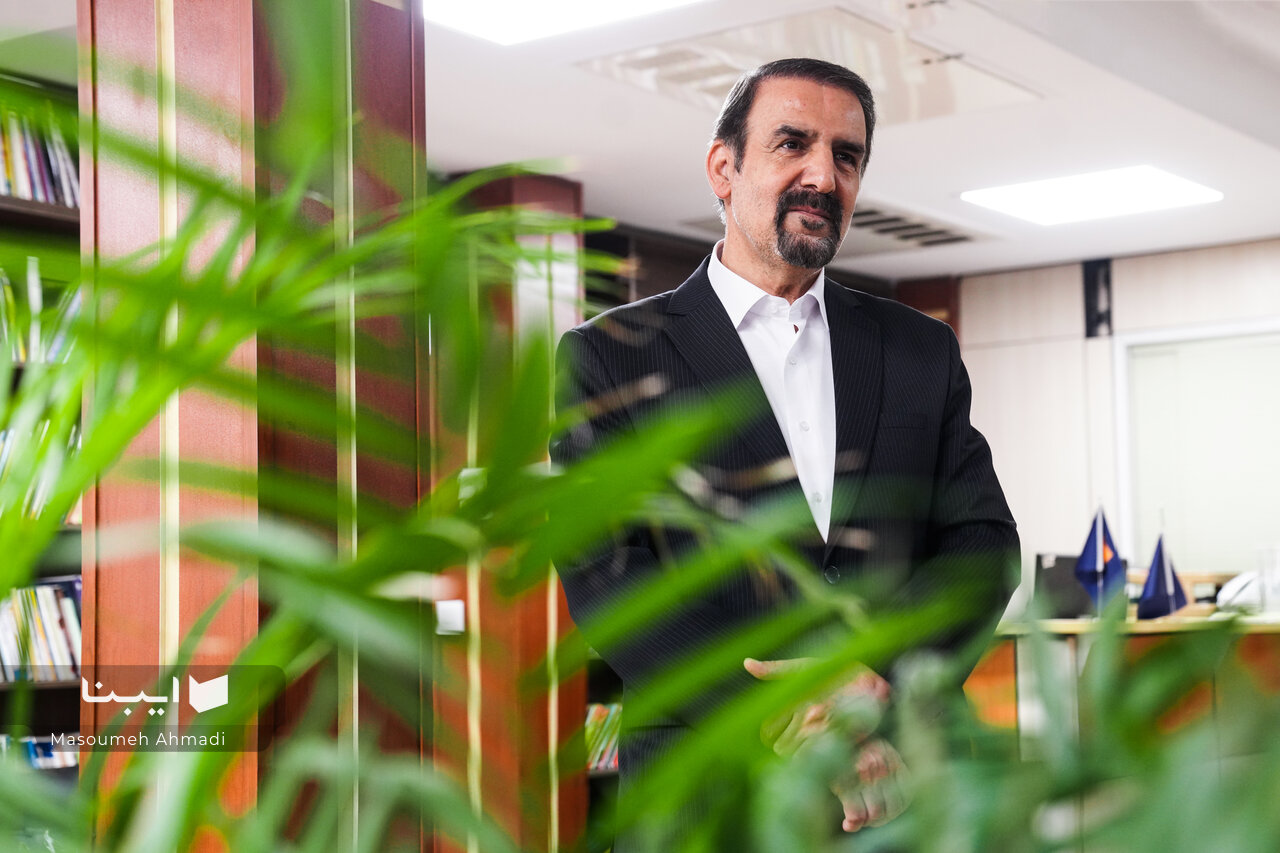
Religion and Thought Desk, Iran Book News Agency (IBNA) – Reza Dastjerdi: On August 15, 2026 (24 Mordad 1405 SH), Mehdi Sanaei—former Iranian Ambassador to Russia and former political advisor/deputy to Masoud Pezeshkian—visited the IBNA office to discuss his new book, Orientalism in Russia. An Associate Professor at the Faculty of World Studies who, throughout his tenure as ambassador and earlier as cultural counselor, never confined himself solely to diplomatic affairs, Sanaei has conducted extensive research on Orientalism, Iranian studies, and Islamic studies in Russia, the synthesis of which is reflected in his latest volume. Marking the release of this book, published by Negarestan-e Andisheh, IBNA conducted an interview with him. Sanaei has authored numerous works in Persian and Russian, including Neoconservatism in the Putin Era and Russia: Society, Politics, and Governance.
Dr. Sanaei, let us begin our discussion with the book itself. What process led to the creation of this work, and what prompted you to compile it?
The genesis of this book stems from two realities in my life. The first is a profound personal affinity for Iranian studies, along with Persian literature and culture. This passion is more of an intrinsic personal calling than something tied strictly to my professional positions, much like many Iranians who share such cultural affinities. Throughout my career and executive tenures, whenever my responsibilities overlapped even slightly with this domain, I endeavored to devote my utmost efforts to Iranian studies and the international promotion of Iran. In areas such as Islamic studies, the propagation of the Persian language, establishing Iranian studies centers, and supporting existing academic hubs, I undertook various initiatives across different periods, facets of which have been documented in several articles and books.
A long tenure in foreign policy, founding Persian language classrooms, establishing Iranian studies centers, supporting Iranologists, organizing numerous symposia on Iranian studies and Persian language pedagogy across various countries—particularly in the Eurasian sphere—compiling extensive reports on the state of Iranian studies in Russia, and sustained engagement and collaboration with international scholars of Iran naturally generated a body of knowledge that served as the catalyst for writing this book. Consequently, much of what is written in this book reflects my personal insights and experiences, real-world events I encountered, and insights gathered through fieldwork.
However, there was a second fundamental reason for authoring this work: the scarcity of comprehensive Persian-language literature on Russian Iranology. Russian Iranology represents one of the world’s most distinguished schools of Iranian studies. Orientalism in Russia, as elaborated in this book, is a renowned three-hundred-year-old academic tradition. Similarly, Iranian studies—from the classical and historical St. Petersburg school to contemporary Iranian studies in Moscow—boasts a distinguished lineage spanning over two centuries with remarkable breadth.
Therefore, for every student and scholar of Iranian studies worldwide, the St. Petersburg and Moscow schools are of paramount importance. Fortunately, over the past two to three decades, this field has expanded further, with Persian language pedagogy and Iranian studies extending across various regions of Russia. Kazan also has an extensive and profound tradition; in fact, a portion of Iranian studies research in St. Petersburg owes its development to the migration of scholars from Kazan University.
Despite this significance, there was a clear deficit of comprehensive Persian-language references regarding Russian Iranology. This book is not merely a critical analysis of Russian scholarship; rather, it is a descriptive compendium encompassing Orientalism, Iranian studies, and to an extent, Islamic studies in Russia—essentially tracing Russian Iranology from A to Z. It delineates when this tradition took shape, who the key figures were, what works they produced, and how the field evolved over time. A full chapter is also dedicated to Islamic studies, as the spread of this discipline—particularly across Eurasia—like the historical dissemination of Islam in the region, owes much to Iran and Iranians, making it inextricably linked with Iranian studies. A notable feature of this volume is its extensive reliance on primary Russian sources, making it a direct, unmediated study.
The book appears to be the culmination of a multi-year project. How did the compilation process unfold?
With the assistance of colleagues who contributed to data collection, this book is the product of several years of work that was nearing completion. However, with the formation of the new administration and my assumption of government responsibilities, the project was temporarily paused. Over recent months, following my departure from official duties and regaining some leisure time, an opportunity arose to finalize the manuscript and publish the book. I hope this volume captures the attention of Iranian scholars and Iranologists, serving as a reliable reference for students and researchers in this field.
Of course, valuable contributions have previously been made in this area, including works on the history of Iranian studies in Russia and the trajectory of Persian language scholarship there. However, the distinctive feature of this book lies in presenting a comprehensive, foundational reference text for the field.
One of the compelling aspects of the book is how the concept of the “Orient” differs between the Russian and European traditions. When a French, British, or German orientalist speaks of the East, its geography is relatively distinct; yet when discussing Russian Orientalism, we encounter a fundamentally different geography. In the preface, you note that for Russia, studying the East is not merely “understanding the Other,” but to some extent part of “national self-discovery.” What does the concept of the East mean to Russians themselves?
As you noted, I addressed this briefly in the preface, highlighting the distinction between Russian Orientalism and its European and American counterparts.
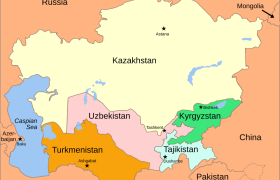
From its emergence and expansion, Russia has been a state spanning a millennium. Over the past three centuries, it consolidated into an empire with established sovereign authority. Russia originally emerged within the European sphere, but with the establishment of the Golden Horde and Mongol-Tatar rule, it absorbed substantial Asian characteristics. In the mid-seventeenth century, Moscow positioned itself as the capital of Eastern Orthodoxy and the Byzantine legacy, and subsequently in the early eighteenth century, under Peter the Great, Russia transformed into a Europeanized power. Yet Russia has perpetually grappled with the geographic reality that a vast portion of Asia lies within its own borders; in other words, a significant part of Russia’s geography is Asian. For this and other historical reasons, Asian elements have continually flowed through the Russian bloodstream.
The Europeanization process and Western-oriented inclinations began in the early eighteenth century but underwent a noticeable shift by the mid-nineteenth century, partly due to Russia’s Asian geography and the growing influence of conservative and anti-Western thought on the broader governance architecture. In the twentieth century, this trajectory culminated in the Soviet Union, which pursued distinct Eurasianist policies. Years after the collapse of the Soviet Union, Russia institutionalized and maintained this Eurasian orientation—both through engagement with the Islamic world and by emphasizing that Russia is part of Asia, fostering partnerships with Asian nations and the non-Western world. Frameworks such as BRICS, the Shanghai Cooperation Organisation, and the Eurasian Economic Union were established in cooperation with other states. Consequently, Russia has never been able to view Asia from a detached distance.
Parts of historical Russia, namely Central Asia and the Caucasus, were integrated into the Russian Empire during specific periods. Today, more than half of Russia’s landmass is situated in Asia. Siberia and the Far East constitute a massive expanse that holds immense strategic importance in Russian state planning today. Therefore, as noted in the preface, Orientalism in Russia represents both “knowledge of the Other” and “knowledge of the Self.”
While for Europe, Orientalism functioned primarily as a study of the Other, in Russia it encompasses both self-discovery and the study of the external world. Even within Iranian studies, portions of the territories under examination were historically part of the Russian Empire or linked to Iran as part of the broader East, some of which emerged as independent nations following the Soviet collapse. Thus, geographic proximity and intertwined historical realities have conferred a unique character upon Russian Orientalism and Iranology.
In the European tradition, various drivers behind the emergence of Orientalism have been identified, including religious, missionary, political, colonial, scholarly, cultural, and commercial motivations. Can the same drivers be attributed to Russian Orientalism, or does the concept of “self-discovery” set it apart?
This is a debate I touched upon at the beginning of the book without delving too deeply into it, as it fell beyond our immediate scope. Exploring this in depth would require presenting diverse perspectives and then advancing the author’s own thesis. That was not the primary focus of this volume, so I left it for another occasion. What I can say, however, is that imperial Russia certainly viewed Orientalism not only as a scholarly discipline but also as an instrument to secure its interests, facilitate global engagement, and maximize state advantages. As noted in the book, Russia originally imported Orientalism from Europe, just as it modeled its Academy of Sciences, universities, and modern institutions on European prototypes during the reign of Peter the Great, even inviting European academics to establish these bodies. Yet, as in many other domains, imported ideas did not remain static in Russia; over time, they adapted to Russian historical realities. Therefore, despite profound continuities with European Orientalism, Russian Orientalism displays distinct and tangible differences.
You mentioned Iranian studies centers and Persian language pedagogy in Russia. How do you assess the current state and vitality of these institutions?
The output of these centers—both during the imperial era and the Soviet period—has been substantial. Eminent Iranologists were trained, and voluminous scholarship was produced. Over recent decades, particularly the past thirty years, significant strides have been made in Persian language instruction and Iranian studies in Russia. Following an initial transitional hiatus between the Soviet era and the emergence of the Russian Federation, the Russian government allocated financial resources to universities and the Academy of Sciences, yielding impressive academic work. For instance, the State Hermitage Museum in recent years has published exquisite catalogs and monographs in Iranian studies, some of which lack modern domestic equivalents in Iran. Over the last decade to fifteen years, comprehensive catalogs documenting Iranian manuscripts, rare books, and artifacts have been published, representing valuable scholarly contributions. Numerous Russian universities and academic centers actively publish scholarly articles and books, and Persian language instruction has recently expanded beyond Moscow and St. Petersburg into Russia’s regional universities.
Owing to the favorable relations between Iran and Russia, Moscow has granted Iran considerable latitude for cultural engagement. Over the years, Iran has carried out substantial cultural activities across Russia, Central Asia, and the Caucasus.
However, the vast cultural capital of Iran, its civilization, and its history demands far greater outreach abroad, including in Russia. Current Iranian cultural initiatives abroad fall well short of what our civilizational and historical heritage warrants. In recent years, various Iranian institutions—such as the Islamic Culture and Relations Organization (ICRO), the Saadi Foundation, and the Iranology Foundation—have been active, but the reality is that the allocated budgets remain modest, leaving the expectations of foreign Iranologists and academic departments unmet. Inconsistent programming, budget shortfalls, domestic bureaucratic misalignment, and at times non-specialized approaches remain persistent challenges in this domain.
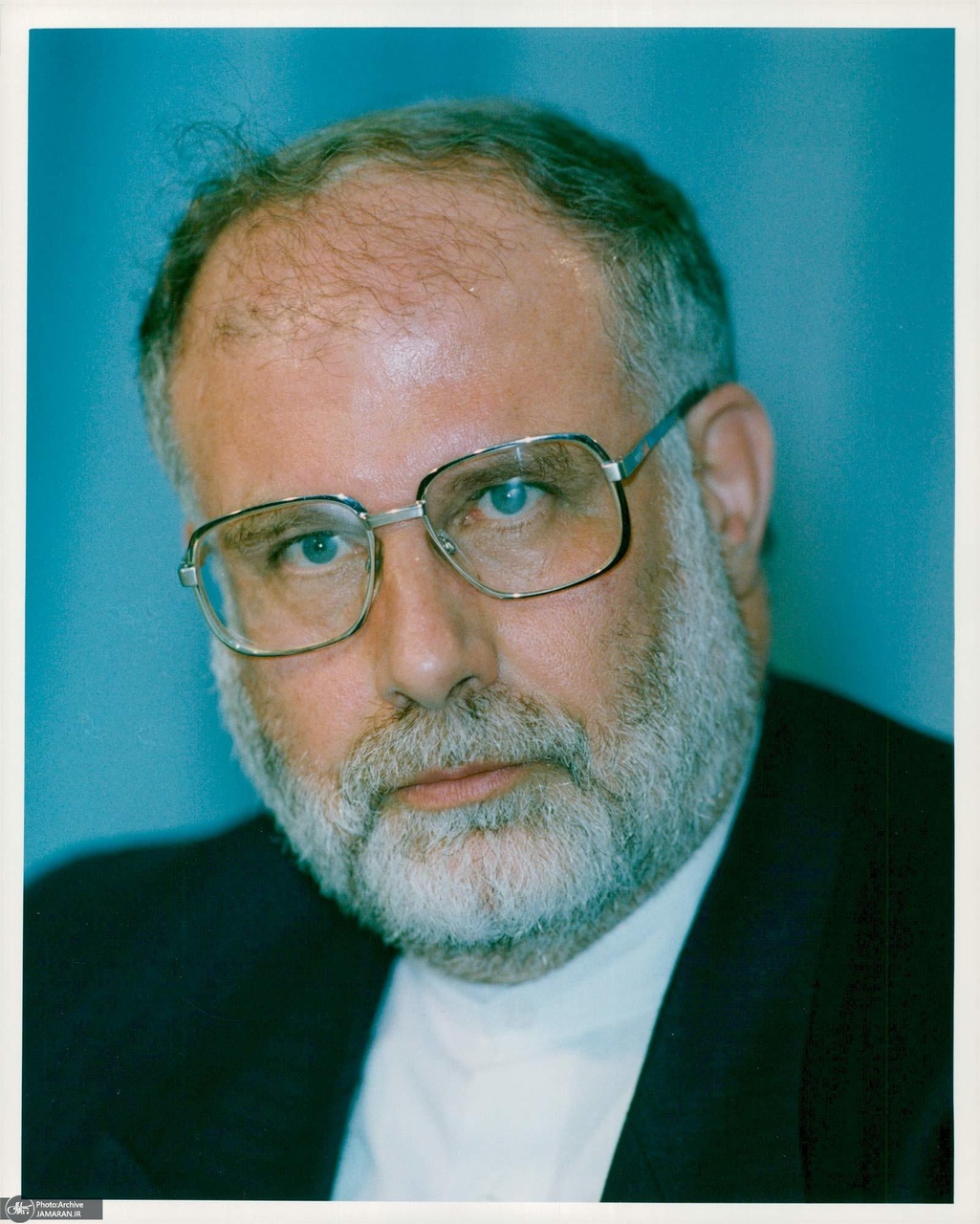
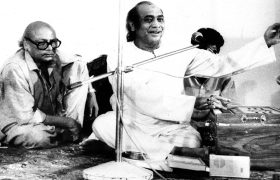
Hassan Habibi
The late Dr. Hassan Habibi, founding president of the Iranology Foundation, also made extensive efforts to equip Iranian studies centers and Persian language departments with necessary resources.
Indeed, the late Dr. Hassan Habibi dedicated immense energy to Iranian studies, organized major Iranology congresses, and established the monumental headquarters of the Iranology Foundation. When the foundation was being constructed, I was serving as Deputy for Education and Research at ICRO. At that time, I felt troubled that our available budget and programmatic output did not match Iran’s civilizational pedigree or the requirements of numerous Persian language departments and Iranology centers abroad. I visited Dr. Habibi to share these concerns. He fully concurred and made a remark that has remained etched in my memory: “Iranian studies and the Persian language are emblems of Iran’s greatness.”
His point was that Iran is inherently a civilizational state; claiming a great history and civilization necessitates investing commensurate resources in it. The Persian language and Iranian studies are indisputable markers of Iran’s stature, yet we allocate insufficient attention and funding to them. While valuable work has been accomplished—and I do not wish to downplay these efforts, particularly in Russia—the capacity and expectations of international Iranologists remain largely unfulfilled.
Beyond financial constraints, another recurring issue is that foreign Iranology departments expect a regular flow of books and periodicals from Iran, yet no Iranian institution handles this on a systematic and continuous basis. Periodic initiatives occur, but sustainable, institutional mechanisms are lacking. Therefore, one cannot assess this situation in black-and-white terms. Sincere efforts have been made, yet activities are periodically disrupted. Ultimately, our country ought to allocate greater resources and strategic attention to Persian language centers and Iranian studies abroad.
On the other hand, Iran’s understanding of Russia seems to face a similar dilemma. Do we in Iran study Russia as extensively as Russian scholars study Iran? In response to this very gap, you established a specialized department at the University of Tehran.
We suffer from a degree of structural lag when it comes to area studies and understanding foreign countries. Consider how extensively other nations study Iran across economic, political, and cultural domains; visitors to those countries are often astonished by the depth and breadth of their knowledge of Iran.
Part of this is driven by academic inquiry, historiography, and cultural studies, but another component is rooted in national interest calculations, as strategic decision-making requires intimate knowledge of external interlocutors. In Iran, while theoretical research has been plentiful, granular, policy-oriented area studies have been less developed. Recent efforts have begun to bridge this divide, but the field requires substantial expansion. For several regions of the world, it remains challenging to identify specialized experts for policy panels or scholarly presentations. This underscores a fundamental issue: specialized area expertise is insufficiently incentivized in our country.
Recognizing this void upon returning from my first diplomatic mission as Cultural Counselor in Russia, I began teaching at the Faculty of Law and Political Science at the University of Tehran before joining the newly established Faculty of World Studies. There, I founded the Department of Russian Studies, focusing specifically on comprehensive country studies. Over nearly two decades since admitting our first cohort, we have trained numerous graduates who now serve as professional researchers across various institutions, combining fluent Russian language proficiency with nuanced knowledge of Russia. The founding vision of the Faculty of World Studies was precisely to promote deep comprehension of foreign nations. In international decision-making, thorough contextual knowledge of regional environments is paramount, and Iran still has much ground to cover in this regard.
Around two decades ago, you also founded the Institute for Iran-Eurasia Studies (IRAS). How do you view the role of such non-governmental think tanks in generating strategic knowledge?
Establishing IRAS roughly twenty years ago was an independent, non-governmental initiative that has successfully matured into a stable, enduring research institution. IRAS conducts diverse activities, has published numerous monographs, and collaborates with a broad network of scholars. As an independent think tank, it focuses on analyzing Eurasian countries and Iran’s relations with them. While a smaller portion of its work is dedicated to Iranian studies, the primary focus lies on understanding Eurasian powers and regions—namely Russia, China, Turkey, India, Central Asia, and the Caucasus. However, non-governmental research institutions in Iran face severe structural hurdles, particularly a lack of institutional support. Managing independent think tanks is exceptionally demanding; securing project funding is difficult, forcing these centers to operate under strict austerity without baseline budgetary allocations. We hope that policymakers will recognize the importance of supporting non-governmental research institutions more broadly. IRAS stands as a recognized independent think tank that provides a sustained intellectual foundation for Iran’s foreign relations.
Over the past year, the country has confronted military aggression from the United States and Israel. Beyond political and military responses, what role do culture and books play in this confrontation?
Our country finds itself in exceptional circumstances, and I want to highlight the role of books and culture in this context. Over the past year, Iran has faced unjust aggression and escalation by the United States and the Israeli regime, creating hardships and constraints. In such circumstances, culture and literature—deeply tied to national identity and cognitive resilience—play a vital role. Alongside these challenges, we have witnessed Iran’s resistance in frustrating the aggressors’ strategic objectives. Documenting the historical record and national resilience through books and publishing is of utmost importance.
From a socio-cultural perspective, this solidarity and cohesion should be viewed as a central focal point, recognizing how the Iranian public stood united to support the nation’s decision-makers and armed forces in resisting aggression.
In my view, while managing wartime realities is critical, what unfolds in the post-war phase is far more consequential. Many nations have used such moments as the springboard for a new social and intellectual renaissance—a movement that mobilizes all national capacities to generate hope and build the future. This is a theme I intend to address in detail elsewhere.
Emerging from war, building a shared future through inclusive participation, fostering collective hope, and generating renewed vitality across politics, culture, and the economy are paramount tasks. This responsibility cannot rest solely on political actors; cultural figures, sociologists, and intellectuals must work alongside the state and decision-makers to shape the country’s trajectory.
Our nation possesses a remarkable historical heritage that has repeatedly proven its ability to guide the country through severe crises. However, we must not adopt an episodic approach. The principle of “Iran for all Iranians”—building Iran’s future, revitalizing its economy, and overcoming the tribulations confronting the country—must be placed before us as an active agenda. Only then can overcoming war and demonstrating wartime resilience lay the foundation for broad-based national flourishing.
While radical tendencies may seek to derail this path and divert developments in a different direction, the overarching responsibility of the country is to avoid being swayed by emotional impulses. Instead, we must use this experience to generate genuine hope for the younger generation and all Iranians, engaging them actively in building the nation’s future.
Having stepped down from official government duties, I had not given any interviews over the past nine months, and I am pleased that this first interview was dedicated to cultural matters on the occasion of this book’s release.