
Author: Central Asia and Caucasus Studies Group, IRAS (The Institute for Iran-Eurasia Studies)
(IRAS Exclusive Analysis)
September 27, the anniversary of Turkmenistan’s independence, offers an opportune moment to reassess the country’s position in Iran’s regional policy. Over the past three decades, Turkmenistan has elevated “permanent neutrality” to a cornerstone of its foreign policy—a doctrine formally recognized by the United Nations General Assembly in 1995 and reaffirmed in March 2025 through a General Assembly resolution reiterating the country’s permanently neutral status.¹
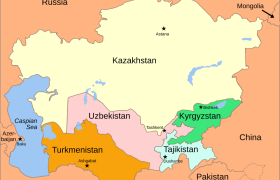
For Iran, however, the significance of Turkmenistan extends far beyond mere geographic proximity to a relatively stable Central Asian neighbor. Turkmenistan’s location east of the Caspian Sea, its vast natural gas reserves, and its position at the terrestrial junction connecting Iran to the wider Central Asian region render it a vital potential link in Iran’s geoeconomic strategy. From this vantage point, the core challenge facing relations between Tehran and Ashgabat is no longer merely “expanding ties with neighbors,” but rather whether the two states can convert their shared geographic proximity into durable economic and transit interdependence.
A Stable Relationship, Yet Below Potential
A defining characteristic of Iranian-Turkmen relations is the absence of acute security and geopolitical friction compared to other segments of Iran’s immediate periphery. Turkmenistan’s policy of neutrality, Ashgabat’s refusal to join military alliances, and its consistent efforts to maintain balanced ties with regional and extra-regional powers have ensured that the shared border has remained largely peaceful and stable over the past three decades.
This dynamic acquires heightened significance given that substantial portions of Iran’s periphery have experienced armed conflict, great-power rivalries, geopolitical crises, and shifting transit corridors in recent years. In such a volatile environment, Turkmenistan represents for Iran not a formal political or military ally, but rather a low-friction, relatively predictable neighbor. The continuation of high-level political consultations between Tehran and Ashgabat into 2026—coupled with mutual affirmations of good-neighborliness, mutual trust, and the implementation of previously concluded agreements—reflects a deliberate effort to preserve this stability in bilateral relations.²
Nevertheless, political stability has not yet translated into a commensurate level of economic interdependence. In 2024, bilateral trade turnover stood at approximately $600 million, falling far short of Iran’s stated target to expand trade with Turkmenistan to $3 billion by 2028.³ This substantial disparity between current volumes and targeted goals demonstrates that economic interaction remains well below the latent geographic and infrastructural capacities of both nations.
Geographic proximity, a shared border, integrated rail and road connections, and complementary economic demands should under ordinary circumstances generate substantially higher trade volumes. Consequently, the primary obstacle in Iranian-Turkmen relations is not a scarcity of potential areas for cooperation, but rather the institutional challenge of operationalizing political accords into durable economic, banking, customs, energy, and logistical networks.
Energy: Moving Beyond a Buyer–Seller Relationship
Energy continues to serve as a cornerstone of bilateral relations, yet the operational framework of this cooperation is undergoing a structural shift. Historically, energy ties centered on the direct export of Turkmen natural gas to northern Iran; past financial and pricing disputes demonstrated that confining energy cooperation to a transactional buyer–seller dynamic left it acutely vulnerable.
A newer model introduces a different strategic framework: energy swaps and transit.
As a major global producer of natural gas, landlocked Turkmenistan views the diversification of its export routes as a strategic imperative. For its part, Iran—by virtue of its geographic location and extensive domestic pipeline grid—can alleviate these landlocked constraints.
The agreement facilitating the transit of Turkmen gas to Turkey via Iranian territory exemplifies this transition. Under the agreement concluded between BOTAŞ and Türkmengaz, deliveries of Turkmen gas to Turkey commenced on March 1, 2025, utilizing a swap mechanism across Iran. The agreement projected deliveries of approximately 1.3 billion cubic meters (bcm) of gas for the initial year, with provisions to scale throughput capacity up to 2 bcm annually.⁴
The strategic value of this development for Tehran is not limited to potential transit and swap fees. Rather, this mechanism demonstrates that Iran can transition from a mere domestic consumer of Turkmen energy into a pivotal transit node linking Central Asian resources to consumer markets further west.
Nonetheless, this potential faces substantial structural constraints. The state of Iran’s domestic gas infrastructure, surging domestic consumption, and the extraterritorial impact of U.S. sanctions can circumscribe Tehran’s capacity to serve as a reliable transit corridor. An analysis by the Centre for Eastern Studies (OSW) in Warsaw underscores that while the Turkmen-Turkish agreement carries real political significance, technical bottlenecks in the Iranian pipeline network and sanctions-related risks pose formidable obstacles to scaling up this corridor.⁵ Consequently, Iran’s geographic location does not automatically guarantee its emergence as an energy hub; geography can translate into tangible geoeconomic influence only if backed by targeted capital investment in infrastructure and proven operational reliability in energy transit.
Turkmenistan: The Northern Link in Iran’s Transit Strategy
A more consequential dimension of bilateral ties lies in transit connectivity. For Iran, Turkmenistan constitutes the primary terrestrial gateway into Central Asia. The Kazakhstan–Turkmenistan–Iran (KTI) railway corridor via Incheh Borun links Iran’s national railway network to Kazakhstan and, through it, to the broader Central Asian hinterland. Conversely, Iran offers Turkmenistan one of the shortest overland transit corridors to the Persian Gulf and the Gulf of Oman.
The imperative of transit connectivity has intensified against the backdrop of heightened corridor competition across Eurasia. Regional crises and conflicts in recent years have demonstrated that trade corridors function not merely as commercial infrastructure, but as foundational pillars of strategic resilience and state maneuverability. For Iran, expanding logistical links with Turkmenistan must therefore be situated within its overarching strategy of connecting landlocked Central Asia to southern Iranian maritime ports.
This dynamic extends beyond bilateral relations. Bilateral consultations have increasingly emphasized the potential of multilateral transport corridors connecting Iran and Turkmenistan to other Central Asian and South Caucasus states. Provided that actual freight volumes expand and persistent customs and infrastructural bottlenecks are eliminated, such networks could consolidate Iran’s role as an interregional hub linking Central Asia, the Caucasus, and southern waters.
From this perspective, Turkmenistan represents for Iran far more than an export destination; it functions as the strategic gateway into the broader geoeconomic space of Central Asia. It is precisely this connectivity function that elevates the strategic value of ties with Ashgabat well beyond current bilateral trade figures.
Turkmenistan’s Neutrality: Constraint or Opportunity for Iran?
Turkmenistan’s doctrine of permanent neutrality is sometimes viewed as a limiting factor in expanding defense and political cooperation. Ashgabat has consistently refrained from entering multilateral arrangements that might compromise its foreign policy independence, choosing instead to anchor its external engagement primarily in bilateral, diplomatic, and commercial frameworks. The United Nations’ reaffirmation of Turkmenistan’s permanent neutrality in 2025 demonstrates the enduring institutional weight of this principle in the country’s international identity.⁶
Yet this posture can also present a strategic advantage from Tehran’s perspective. Expanding relations with Turkmenistan does not require Iran to engage in direct zero-sum security competition with Russia, China, Turkey, or Western powers. The optimal framework for cooperation with Ashgabat is inherently geoeconomic and non-bloc-oriented: energy swaps, transit corridors, cross-border commerce, electricity grid interconnection, Caspian Sea affairs, and broader economic and cultural exchanges.
Diplomatic engagements in 2026 reflect this cooperative potential. During consultations between the foreign ministers of Iran and Turkmenistan in May, the two sides discussed bilateral ties, regional security, the utilization of diplomatic instruments for conflict prevention, and the preservation of the Caspian Sea as a zone of peace, good-neighborliness, and cooperation.⁷ Similarly, in June, both capitals reaffirmed their commitment to advancing relations on the basis of good-neighborliness, mutual respect, and trust.⁸
Indeed, Turkmenistan’s significance for Iran stems from the fact that deepening bilateral relations does not require an expansive political or security alignment. The two states can foster substantive economic and infrastructural interdependence without having to construct a formal political alliance.
From a “Neighborliness Policy” to a “Connectivity Policy”
Nevertheless, if Iranian-Turkmen relations remain confined to high-level diplomatic visits, joint intergovernmental commissions, and formal memoranda of understanding, a substantial share of their shared geopolitical potential will remain unfulfilled. The $3 billion bilateral trade target, the expansion of gas swaps, the augmentation of road and rail throughput capacity, and the deepening of cross-border trade acquire strategic weight only when integrated into a cohesive policy framework.
In its engagement with Turkmenistan, Iran requires above all a proactive connectivity policy—one that ceases to treat energy, railways, road networks, cross-border commerce, and Central Asian transit as disparate sectors, integrating them instead into a unified geoeconomic matrix.
This recalibration is especially urgent given that Iran contends in Central Asia with actors such as China, Russia, and Turkey, each possessing formidable capital, institutional, and infrastructural capabilities. Iran lacks the vast financial reserves necessary to match China’s large-scale capital investments, nor does it possess Russia’s traditional institutional and political levers in Central Asia. Tehran’s primary comparative advantage lies elsewhere: in its geography.
Iran’s concurrent overland and maritime access to Central Asia, the Caucasus, the Persian Gulf, and the Gulf of Oman provides a strategic asset that—if supported by completed infrastructure and the reduction of trade and transit friction—could mitigate some of the state’s broader political and economic constraints. Turkmenistan represents one of the neighboring states where this geographic advantage can most readily be converted into tangible economic dividends.
Conclusion
On the thirty-fifth anniversary of Turkmenistan’s independence, relations between Tehran and Ashgabat stand out as among Iran’s most stable, yet least realized, regional partnerships. Mutual political trust and the absence of acute security friction have provided a baseline for engagement, yet bilateral trade turnover and economic ties remain disproportionately modest compared to the geographical potential of both states.
Recent developments—notably the operationalization of the Turkmen gas swap to Turkey via Iran, ongoing efforts to elevate bilateral trade, and renewed focus on multimodal transit connectivity—demonstrate the feasibility of transitioning from a purely bilateral dynamic to an integrated regional geoeconomic partnership.
For Iran, Turkmenistan’s strategic significance derives less from its domestic market size or political weight than from its role as an indispensable conduit linking Iran to Central Asia and wider Eurasian networks. Conversely, for Turkmenistan, Iran offers a direct transit corridor capable of alleviating the vulnerabilities of a landlocked geography while diversifying its export routes to southern maritime terminals and western markets.
Accordingly, the next phase of Iranian-Turkmen engagement must move beyond generic calls for “expanding cooperation” toward the construction of structural infrastructural interdependence. If Tehran successfully aligns energy swaps, transit routes, cross-border commerce, and railway connectivity within a cohesive strategic posture, Turkmenistan can evolve from a stable neighbor into a foundational pillar of Iran’s broader Central Asian engagement.
References
- United Nations General Assembly, “Permanent Neutrality of Turkmenistan,” Resolution A/RES/79/274, adopted March 21, 2025; United Nations Digital Library.
- Ministry of Foreign Affairs of Turkmenistan, “Current Issues of Turkmen-Iranian Cooperation Discussed in Ashgabat,” June 12, 2026.
- “Iran Proposes Roadmap to Revitalize Trade Turnover with Turkmenistan,” Trend, May 19, 2025.
- Republic of Türkiye, Ministry of Energy and Natural Resources, “We Will Supply 1.3 Billion Cubic Meters of Natural Gas by the End of the Year,” February 12, 2025; OSW Centre for Eastern Studies, “Problematic Diversification: Turkey’s Gas Agreement with Turkmenistan,” February 20, 2025.
- Adam Michalski and Marcin Popławski, “Problematic Diversification: Turkey’s Gas Agreement with Turkmenistan,” OSW Centre for Eastern Studies, February 20, 2025.
- United Nations General Assembly, “Permanent Neutrality of Turkmenistan,” A/RES/79/274, March 21, 2025.
- Ministry of Foreign Affairs of Turkmenistan, “Statement for Mass Media,” May 4, 2026.
- Ministry of Foreign Affairs of Turkmenistan, “Current Issues of Turkmen-Iranian Cooperation Discussed in Ashgabat,” June 12, 2026.