By: IRAS Editorial Board
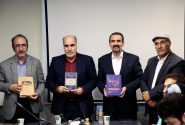
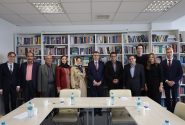
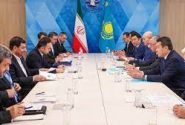
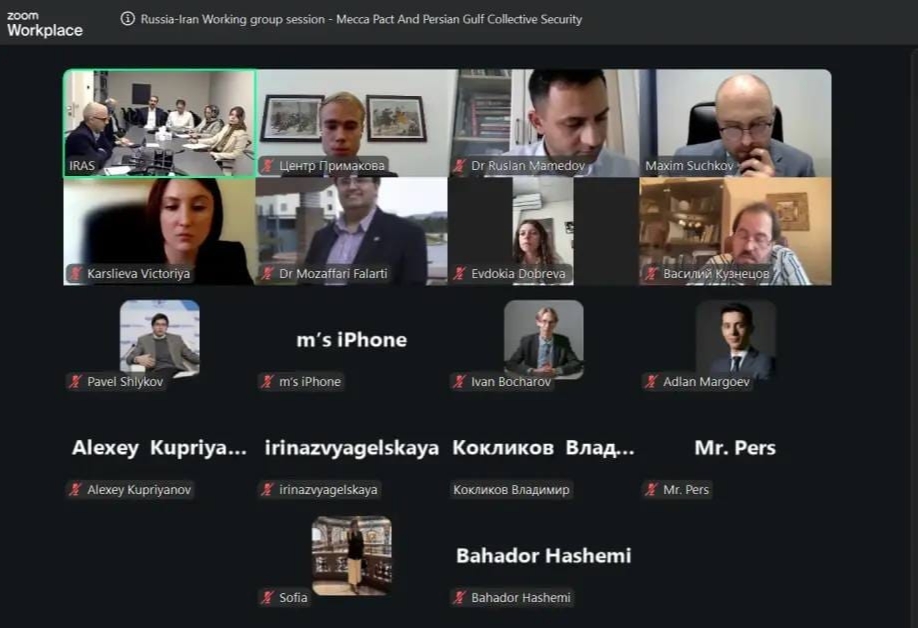
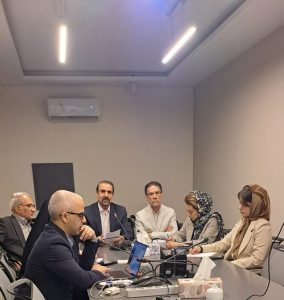
On September 2, 2026, a joint expert meeting between the Institute for Iran and Eurasia Studies (IRAS) and the Primakov Institute was held under the theme of “The Mecca Pact and Collective Security in the Persian Gulf,” with the participation of the heads, researchers, and experts of the two institutions, as well as a number of Iranian and Russian experts and scholars.
From the Iranian side, in addition to senior officials and resident experts of the Institute for Iran and Eurasia Studies, Dr. Seyed Jalal Dehghani Firoozabadi, faculty member of Allameh Tabataba’i University and Secretary of the Strategic Council on Foreign Relations; Mohammad Farazmand, former Ambassador of the Islamic Republic of Iran to Türkiye; and Dr. Maziar Mozafari, faculty member of the University of Tehran, attended the meeting. From the Russian side, Viktoria Karselieva, Director of the Primakov Center; Maxim Suchkov, Director of the Institute for International Studies at the Moscow State Institute of International Relations (MGIMO); Vasily Kuznetsov, Deputy Director of the Institute of Oriental Studies of the Russian Academy of Sciences; and Pavel Shlikov, Head of the Oriental Studies Program at the Institute for International Studies of MGIMO, participated in the meeting alongside a number of other Russian experts and researchers.
The main focus of the meeting was an examination of the “Mecca Pact” between Saudi Arabia, Türkiye, and Pakistan and its potential implications for the region’s security architecture. Participants examined the pact as something extending beyond a trilateral defense agreement and situated it within the broader efforts of regional powers to redefine patterns of security cooperation amid the changing geopolitical circumstances of the Middle East.
In this context, the background and objectives behind the formation of the pact, its capabilities and limitations, and its potential impact on security arrangements in the Persian Gulf were discussed. One of the key questions was the extent to which the Mecca Pact could maintain independence from security arrangements led by the United States and whether it has the potential to develop into an independent or parallel defense structure in the region. The roles of the United States, China, and Russia; the continuation of Washington’s strategic relations with Arab countries; Israel’s position in the region’s security equations; deterrence; and the military and defense cooperation among the member states were also examined.
Another part of the meeting focused on the implications of the recent war between the United States and Israel and Iran for the security calculations of regional countries. Particular attention was paid to regional countries’ efforts to diversify their relations and defense cooperation and to reduce their vulnerability to future developments and crises. The roles and objectives of Saudi Arabia, Türkiye, Pakistan, and Egypt in this process, as well as the possibility of other countries participating in or joining the Mecca Pact, were among the other issues discussed.
The implications of these developments for the Islamic Republic of Iran were also examined in particular. Possible changes in regional balances, transformations in the security geography surrounding Iran, the establishment of new defense cooperation infrastructures, and the impact of relations among Saudi Arabia, Türkiye, Egypt, and Yemen on Iran’s regional position were among the issues discussed. In this regard, the situation of Iran vis-à-vis Israel, as well as Tehran’s options for managing its surrounding security environment and responding to emerging regional arrangements, were also considered.
The relationship between the Mecca Pact and existing security structures was subsequently examined. In this regard, it was argued that the establishment of new arrangements does not necessarily mean the replacement of previous structures and may instead lead to the emergence of parallel, overlapping, or complementary mechanisms. Accordingly, the manner in which the pact interacts with the bilateral defense relations of regional countries and the military presence of extra-regional powers was assessed as one of the factors that could shape its future trajectory.
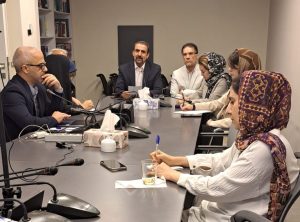
In the final part of the meeting, Russia’s approach to the Mecca Pact and the prospects for security developments in the Persian Gulf were examined. Given the fluidity of regional conditions and the multiplicity of variables at play, participants maintained that it is still too early to regard the Mecca Pact as an established structure with a clearly defined trajectory and definite consequences. The pact’s degree of cohesion and durability, its interaction with existing structures, and its impact on the regional balance are among the issues that will require continued monitoring and analysis.
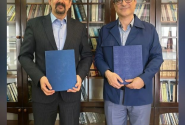
It is noteworthy that at the beginning of the meeting, the publication of the book Oriental Studies in Russia by Dr. Mehdi Sanaei was also highlighted. The work was described as an effort to gain a more accurate understanding of Russia’s intellectual and policy developments toward the East. The participants also emphasized the importance of strengthening academic and expert exchanges between Iranian and Russian research institutions and continuing joint meetings to facilitate the exchange of views on regional and international issues.