News
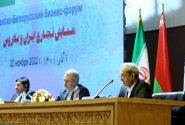
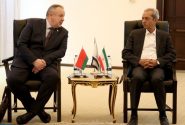
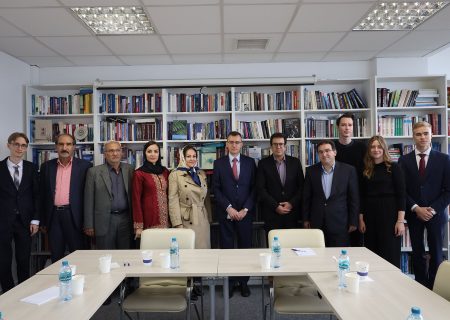
 Delegation of the Institute for Iran &Eurasia Studies Visited RIAC
The Strong Developmental State: A Review of Seyfodini’s Theory of Iranian Statecraft
Bagram Airfield: Central Asian Security Dynamics and Great Power Rivalry
Iranian Studies in Armenia: Challenges and Future Prospects
The European Snapback Mechanism Against Iran and the US-Israeli Acts of Aggression: An Analysis Under International Law and Norms
Delegation of the Institute for Iran &Eurasia Studies Visited RIAC
The Strong Developmental State: A Review of Seyfodini’s Theory of Iranian Statecraft
Bagram Airfield: Central Asian Security Dynamics and Great Power Rivalry
Iranian Studies in Armenia: Challenges and Future Prospects
The European Snapback Mechanism Against Iran and the US-Israeli Acts of Aggression: An Analysis Under International Law and Norms
Regions


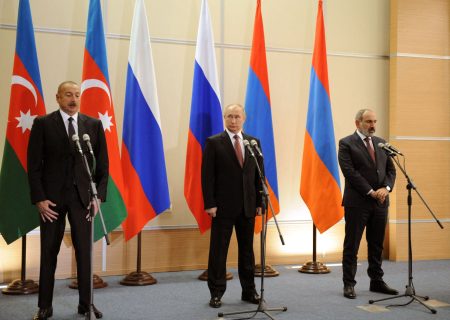
An Analysis of Armenia Not Welcoming Tripartite Negotiations
Strategic Council Online – Interview: An expert on Caucasus affairs said: Armenia is angry with Russia over its failure to give a quick and decisive response regarding the lifting of the blockage of the Lachin Corridor, and by not welcoming tripartite negotiations, it intends to show its dissatisfaction, but this action will not help to improve the situation and enables the Republic of Azerbaijan to find the possibility for more movement.
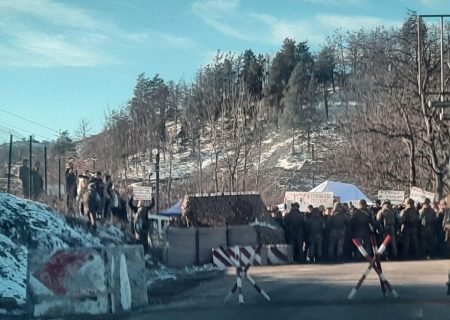
The causes and consequences of blocking the Lachin corridor
Strategic Council Online—Interview: Emphasizing that the Republic of Azerbaijan and Armenia should respect each other’s territorial integrity and observe international standards, an expert on international issues said that what happened with the blocking of Lachin corridor is against the standards of international law. The Republic of Azerbaijan should be demanded to cancel the restrictions and at the same time clarify the ambiguities of the Moscow Agreement, which was signed with the presence of Russia and between Armenia and the Republic of Azerbaijan, otherwise there is always the possibility of conflicts and disputes.

The ineffectiveness of setting the oil price ceiling for Russia to surrender
Strategic Council Online-Opinion: Recently, the Group of Seven, including seven countries with advanced economies, decided to set the price ceiling of Russian crude oil at 60 dollars per barrel in order to hit the main source of Moscow’s income at the same time as the country’s war against Ukraine is prolonged. The European Union also supported the Russian oil price cap and the US government welcomed it. Pouria Nabipour – PhD in Political Science and International Relations
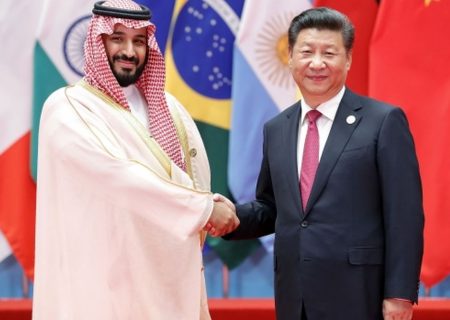
Strategic factors behind China’s (US rival) tendency towards the Persian Gulf region
Strategic Council Online—Opinion: In the recent visit of the President of China to Saudi Arabia and the unacceptable association of this country with the anti-Iranian statements of the Saudi authorities and also the members of the Persian Gulf Cooperation Council, while provoking public anger in Iran, has raised various ideas and analyses surrounding why this happened and the reasons for China’s closeness to the Arab countries of the Persian Gulf; But in this news-analytical frenzy, what has been neglected or at least less addressed is the examination and analysis of the variables and factors that caused China to be attracted to the Persian Gulf region as a competing power of the United States and its eagerness to enter into strategic agreements with various countries in this region. Mohammad Mehdi Mazaheri—University professor

OGAS & The Fate of the Soviet Internet; A Great Story of Communication History During the Cold War (Part I)
Amidst the turbulent and strained relations between the United States and the Soviet Union in the early 1960s, when Khrushchev was heavily criticized, and the Bay of Pigs invasion and Cuban Missile Crisis set the stage for a nuclear war, a small group of cybernetics living in Moscow and Kyiv were designing "electronic socialism" known as OGAS.
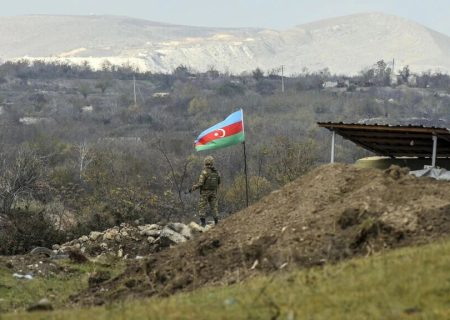
Strategic consequences of attempting unacceptable border changes in the South Caucasus
Strategic Council Online–Opinion: Baku claims based on paragraph 9 of the tripartite agreement that was clinched after the second Karabakh war on November 10, 2020, the right was given to the government of Baku to build through the territory of Armenia an exclusive “corridor” under Azerbaijan’s sovereignty to Nakhchivan. Hamid Khoshayand—Expert of regional issues
Motives and consequences of gas agreement between Russia and the Republic of Azerbaijan
Strategic Council Online—Interview: An expert on Russian issues, stating that one of Europe’s measures to reduce the costs and political and economic consequences of its decisions is the indirect import of energy from Russia, said that a behind-the-scenes agreement between Russia and the West in this regard is not unlikely.
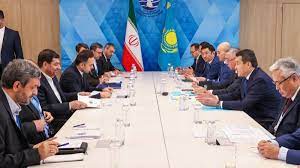
Prospects of transportation cooperation between Iran and Kazakhstan
Nurlan Kolbatyrov, Vice President of Trade Development of Kazakhstan, said: One of the important goals of the Kazakh government is to use Iran's transit capacity.