News
 Dr. Mehdi Sanaei Addresses the St. Petersburg International Economic Forum: The 3+3 Format and the Future of Regional Cooperation in the South Caucasus
Appointment of Dr. Behzad Ahmadi as Executive Director of the Institute for Iran-Eurasia Studies (IRAS)
The United Nations at a Crossroads: Legitimacy and Power in an Emerging Multipolar Order
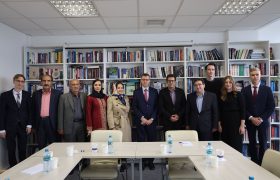
Delegation of the Institute for Iran &Eurasia Studies Visited RIAC
The Strong Developmental State: A Review of Seyfodini’s Theory of Iranian Statecraft
Dr. Mehdi Sanaei Addresses the St. Petersburg International Economic Forum: The 3+3 Format and the Future of Regional Cooperation in the South Caucasus
Appointment of Dr. Behzad Ahmadi as Executive Director of the Institute for Iran-Eurasia Studies (IRAS)
The United Nations at a Crossroads: Legitimacy and Power in an Emerging Multipolar Order
Delegation of the Institute for Iran &Eurasia Studies Visited RIAC
The Strong Developmental State: A Review of Seyfodini’s Theory of Iranian Statecraft
Regions
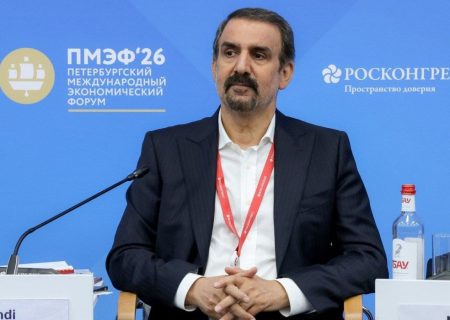
Dr. Mehdi Sanaei Addresses the St. Petersburg International Economic Forum: The 3+3 Format and the Future of Regional Cooperation in the South Caucasus
Dr. Mehdi Sanaei’s Address at the St. Petersburg International Economic Forum “The 3+3 Format on the South Caucasus: Common Challenges and Strategic Partnership” Session – June 2026
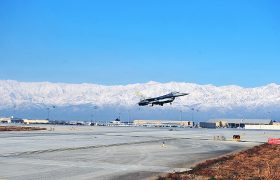


EUROPE’S STRATEGIC NEED FOR DIVERSIFICATION OF GAS SUPPLY RESOURCES, ONWARD OPTIONS
Opinion: In the contemporary world, many and serious changes are taking place in the players and effective variables, resources and control methods in the field of international politics; but for the Europeans, limited access to diverse energy resources, as well as problems with safe and cheap access to resources such as gas, especially after it became clear that the tool could be used as a political lever, has made energy resources and their transfer lines into a very important and vital factor in the field of international politics and international security. In this regard, recent developments in oil and gas exporting countries have increased the importance of the issue. Mehdi Khorsand – Expert on Eurasia affairs

DIMENSIONS OF INTERNATIONAL SYSTEM CHANGE IN AFTERMATH OF UKRAINE WAR
Experts on Russia and international relations, in an expert session hosted by the Strategic Council on Foreign Relations, examined the dimensions of the change in the international system following the Ukraine war.

Iran’s Eastern Policy: Potential and Challenges
Since the 1979 Revolution, the foreign policy of the Islamic Republic of Iran has relied on the “Neither East nor West” motto. It was based on the Constitution of the Islamic Republic drafted amid the Cold War in the bipolar system and under the independent approach assumed by Iran’s newly established government.

OBJECTIVES, CONSEQUENCES OF SIGNING MOSCOW-BAKU DECLARATION ON ALLIED INTERACTION
Interview: An expert on international law stressed: Baku is concerned about the possibility of Russia recognizing the independence of the Karabakh region in coming years, and according to the Declaration on Allied Interaction, it gives guarantees to Russia so that Moscow will not implement the formula of supporting separatism in Karabakh and even in the Lezgian regions of northern Azerbaijan.