A distinctive feature of Uzbek scholarship in Iranian studies is its pronounced emphasis on intellectual and literary figures who inhabit the shared civilizational space linking Iran and Central Asia.
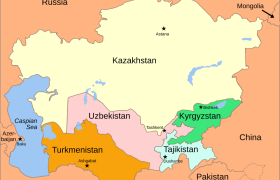
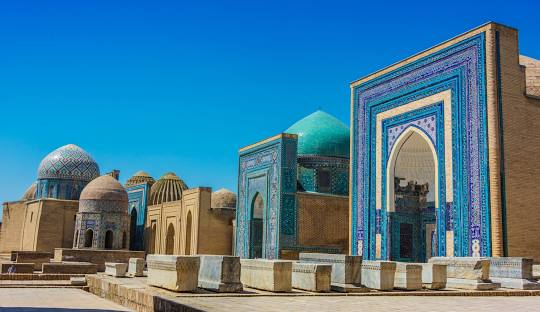
Iranian studies in Uzbekistan cannot be viewed merely as an academic discipline or a confined subfield of Oriental studies; rather, it reflects the deep-seated historical, linguistic, cultural, and civilizational ties linking Iran and Transoxiana. For centuries, cities such as Samarkand, Bukhara, Termez, and Khwarazm stood as preeminent hubs for the production and transmission of Iranian knowledge, literature, and culture, where many of the towering figures of Islamic and Iranian civilization lived and flourished. Consequently, Iranian studies in Uzbekistan represents less an inquiry into a foreign country than an exploration of an intrinsic component of the region’s own historical and cultural heritage.
Despite this rich background, Iranian studies in Uzbekistan has experienced numerous historical shifts. During the Soviet era, these studies evolved predominantly within the framework of classical Orientalism and Iranology, whereas following Uzbekistan’s independence in 1991, they were gradually redefined through a national lens tailored to the country’s foreign policy and cultural priorities. Today, while Iranian studies maintains a distinguished scholarly standing in Uzbekistan, the discipline confronts several pressing challenges, including constrained educational resources, a diminishing cohort of Persian language specialists, and limited institutional connectivity with Iranian research centers.
The modern institutionalization of Iranian studies in Uzbekistan traces its origins to the broader emergence of Oriental studies in Central Asia. In 1918, the Turkestan Oriental Institute was established in Tashkent as the first higher education center for Oriental studies in the region. From its inception, the Persian language was taught alongside Arabic, Turkic, Urdu, Pashto, and Chinese, with Iranian history, geography, and culture forming an integral part of the curriculum. This center was later incorporated into Central Asian State University, and with the reopening of the Faculty of Oriental Studies in 1944, the Chair of Iranian Philology became one of its core academic divisions.
This institutional momentum positioned Tashkent as one of the premier centers of Iranology in the Soviet Union. Between the 1950s and 1980s, Uzbek and Russian scholars produced foundational scholarship on Persian linguistics, classical literature, Iranian history, Persian manuscripts, and the historical relations between Iran and Central Asia. Furthermore, the presence of visiting Iranian and Afghan faculty during specific periods played a critical role in advancing applied Persian language pedagogy.
Following Uzbekistan’s independence, despite extensive restructuring across the national higher education system, the tradition of Iranian studies endured. Today, the leading institution in this field is the Tashkent State University of Oriental Studies (TSUOS), representing the continuity of more than a century of Orientalist education in Central Asia. Within this university, the Faculty of Iranian and Afghan Studies and the Department of Iranian and Afghan Philology oversee instruction in the Persian language, Persian literature, Iranian history, and Iranian cultural studies, where students across various degree levels study the language, analyze classical texts, and investigate Iran–Central Asia relations.
A defining hallmark of Iranian studies in Uzbekistan is its close nexus with codicology, manuscript studies, and written heritage. Uzbekistan houses one of the world’s most extensive repositories of Persian manuscripts. Libraries and research centers across Tashkent, Samarkand, and Bukhara preserve thousands of Persian, Arabic, and Turkic manuscripts, many of which remain to be critically edited, cataloged, or published. The foremost collection in this domain is held at the Abu Rayhan Biruni Institute of Oriental Studies under the Academy of Sciences of Uzbekistan, which stands as one of the world’s richest archives of Islamic manuscripts, with a substantial portion written in Persian.
The significance of these collections lies not merely in their sheer volume, but in the fact that many represent unique or extraordinarily early extant copies of Persian classical works. Ferdowsi’s Shahnameh, Nizami’s Khamsa, Saadi’s Golestan and Bustan, Rumi’s Masnavi, Hafez’s Divan, and the works of Jami and Bidel Dehlavi, alongside hundreds of historical, philosophical, and mystical treatises, are preserved within these archives. From this standpoint, Uzbekistan represents one of the most vital hubs for research on Persian written heritage outside of Iran.
Another distinctive aspect of Iranian studies in Uzbekistan is its focused engagement with luminaries situated at the shared cultural intersections of Iran and Central Asia. Polymaths and literary figures such as Abu Rayhan Biruni, Ibn Sina (Avicenna), Rudaki, Jami, Nasir Khusraw, Khwaja Abdullah Ansari, and many others occupy a prominent place in Uzbek academic scholarship. In recent years, a national rereading of these figures has emerged within official discourse, occasionally emphasizing their geographical origin within modern Uzbek territory over their broader Iranian or Islamic civilizational identity. While this trend is understood as part of post-independence national identity construction, it can at times engender identitarian contestation over shared cultural heritage.
Pedagogically, Persian remains one of the vital Eastern languages across Uzbek universities. In addition to contemporary Persian, students are trained in classical literature, historical grammar, and archaic textual traditions. Nevertheless, a declining number of fluent faculty, the scarcity of updated instructional materials, and limited sabbatical or study-abroad opportunities in Iran pose significant hurdles. While academic cooperation with Iran—through faculty exchanges, instructional workshops, and library donations—has partially mitigated these gaps in recent years, these efforts remain well below the actual potential of both nations.
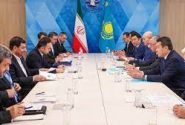
In recent years, alongside the expansion of political and economic relations between Tehran and Tashkent, new avenues have opened for advancing Iranian studies. Increased academic exchanges, the signing of inter-university memorandums of understanding, cultural weeks, and expanded language instruction reflect a renewed recognition of bilateral academic potential. However, existing cooperation remains disproportionately concentrated on language training, with limited expansion into collaborative research projects, codicology, historiography, or regional studies.
Iranian studies in Uzbekistan also possesses significant potential to enrich regional studies. Positioned at the geopolitical heart of Central Asia, Uzbek scholars possess profound insight into the history, culture, and structural shifts of the wider region. Merging this local expertise with Iranian studies could foster collaborative research on themes such as the Silk Road, historical Iran–Central Asia cultural interactions, the evolution of the Persian language, Safavid–Shaybanid dynamics, the Timurid legacy, and the broader imprint of Iranian civilization on regional identity formation.
Concurrently, Iranian research institutions stand to benefit substantially from Uzbekistan’s scholarly assets. Numerous manuscripts, archival documents, and monographs published in Tashkent remain underutilized by Iranian researchers, with limited access posing a barrier to joint scholarship. Establishing joint digitization initiatives for manuscript collections, organizing specialized symposia, facilitating faculty and student exchanges, co-authoring scholarly volumes, and supporting the translation of academic works could substantially elevate the standing of Iranian studies in both nations.
In sum, Iranian studies in Uzbekistan represents not only an enduring tradition within the country’s Orientalist scholarship, but also a vital civilizational bridge linking Iran and Central Asia. The shared historical continuum, established academic institutions, vast repositories of Persian manuscripts, and ongoing language training collectively provide a solid foundation for expanded scholarly engagement. The future of this discipline will ultimately depend on the depth of institutional collaboration between universities and think tanks in both countries. By evolving beyond basic language instruction toward joint research, manuscript preservation, cultural historiography, and regional studies, Iranian studies in Uzbekistan can once again emerge as a preeminent hub for the study of Iranian civilization across Central Asia.