

By: Tayebeh Vaezi – Faculty Member, Department of Regional Studies, Faculty of Law and Political Science, University of Tehran.
Introduction
August 19, 1919, marks a pivotal turning point in the political history of Afghanistan and stands as a major diplomatic milestone, signifying the Afghan state’s successful reclamation of its sovereignty and independence in foreign affairs. This autonomy had previously been forfeited in the aftermath of the Second Anglo-Afghan War and the 1879 Treaty of Gandamak, which subordinated Afghan foreign policy to the dictates of the British Empire. The regaining of independence in 1919 was the culmination of a confluence of domestic developments and broader international dynamics in the early twentieth century. Grounded in neoclassical realist theory and drawing upon historical and international relations scholarship, this article seeks to answer the central research question: What factors shaped Afghanistan’s attainment of independence in August 1919?
- From the Treaty of Gandamak to the Treaty of Rawalpindi
In 1879 (1257 SH), following British incursions into Afghan territory and the outbreak of the Second Anglo-Afghan War, the reigning Amir of Afghanistan, Mohammad Yaqub Khan, signed the Treaty of Gandamak. Under this agreement, he conceded control over Afghanistan’s external affairs to the British Empire, which sought to forestall potential Russian advances toward British India through Afghan territory.
Guided by realist calculations of imperial interest, British strategists concluded that outright annexation of Afghanistan would impose prohibitive financial and administrative costs on the Empire. Instead, they opted to preserve Afghanistan’s domestic central authority while utilizing the country as a defensive shield for India. Consequently, rather than pursuing direct colonial occupation, the British Empire negotiated with the central government, binding Kabul to conduct its foreign policy exclusively under British oversight, accept a British resident representative in the capital, and cede control over vital strategic territories and corridors, most notably the Khyber Pass.[1]
In exchange, Great Britain pledged to defend Afghanistan against unprovoked foreign aggression and provided an annual financial subsidy[2] to the central government. In this manner, Afghanistan’s strategic geography—vital in preventing a direct clash between the two imperial rivals of the nineteenth-century “Great Game”—formally established the country as a buffer state in international politics.
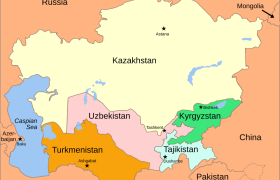
Concurrently, Afghan emirs leveraged the political room for maneuver and financial subsidies provided by Britain—albeit at the steep cost of surrendering external autonomy and relinquishing control over the demarcation of their frontiers in the northwest (Panjdeh)[3], northeast (the Wakhan Corridor)[4], and the east and southeast (the Durand Line)[5]—to subdue domestic rivals, reorganize the military, and consolidate central authority.[6] Nevertheless, this arrangement proved unsustainable. A convergence of domestic and international shifts, culminating in a brief armed conflict, eventually compelled Great Britain to concede to the full restoration of Afghanistan’s external sovereignty.
- The Treaty of Rawalpindi: Context and Preconditions through a Neoclassical Realist Lens
While maintaining the centrality of the international system’s anarchic structure, neoclassical realism emphasizes the intervening role of unit-level variables—such as elite perceptions, domestic institutions, ideology, and state material capacity—in shaping foreign policy. In the context of Afghan independence, this framework provides analytical leverage to examine how domestic variables within both Afghanistan and Britain interacted with overarching structural pressures throughout the process of emancipation.
- Structural Factors: Within this framework, the primary catalyst for independence was the systemic opening created by shifts in the global balance of power following World War I. Although Great Britain emerged on the winning side of the conflict, wartime exhaustion and economic strain severely depleted its imperial capacities. The relative decline of British dominance across its colonial territories, mounting anti-colonial unrest, and the prohibitive costs of maintaining an interventionist posture in Afghanistan’s external relations—compounded by the October 1917 Bolshevik Revolution, which temporarily diminished Russian influence along the northwestern frontier—prompted British policymakers to reassess the viability of Afghanistan’s protectorate status.
In 1907, driven by a shared apprehension of a rising common adversary—Imperial Germany—Russia and Great Britain had demarcated their respective spheres of influence through the Anglo-Russian Convention. In the wake of the 1917 October Revolution, this imperial rivalry initially receded as the nascent Bolshevik regime focused on internal consolidation and domestic stability. Over time, however, geopolitical competition reemerged in a fundamentally transformed ideological guise: no longer a conventional imperial contest over Afghanistan as territorial real estate, but an active anti-imperialist campaign.
The Soviet government began by formally repudiating the imperialist treaties of Tsarist Russia, styling itself as a defender of national self-determination. In 1918, under the terms of the Treaty of Brest-Litovsk[7], Moscow officially recognized Iran and Afghanistan as free and sovereign states for the first time. Subsequently, just months prior to the signing of the Treaty of Rawalpindi—and aiming to prevent Afghanistan from serving as a British staging ground against Soviet Turkestan—the Bolshevik regime formally recognized Afghan independence and exchanged diplomatic envoys with Kabul. Consequently, while Russia’s internal revolutionary turmoil temporarily alleviated the conventional military threat to British interests, it introduced a new strategic anxiety: the specter of an independent or Soviet-leaning Afghanistan serving as a conduit for revolutionary subversion directed into British India.[8]
Accordingly, although Great Britain maintained military superiority during the Third Anglo-Afghan War—sparked by the proclamation of independence by the reigning Afghan ruler, Amir Amanullah Khan—concerns over widespread tribal rebellions along the frontier and the escalation of anti-colonial unrest in India compelled London to settle for a limited military outcome and enter diplomatic negotiations, culminating in the Treaty of Rawalpindi.[9] In essence, constrained by emerging structural realities, Britain sought a cost-effective strategy to mitigate potential Soviet influence in the post-war era.
- Elite Perceptions: Upon ascending the throne in February 1919, Amanullah Khan swiftly evaluated the prevailing domestic and international climate, declared Afghanistan’s complete independence from Britain, and formally abrogated the Treaty of Gandamak. His perception of Britain’s relative vulnerability—a consequence of post-World War I exhaustion and mounting domestic instability in British India—converged with the rise of domestic nationalist sentiments, which had been nurtured by earlier modernization reforms, the establishment of the modern Habibia School, and the growing exposure of Afghan intellectuals to Western political thought. Consequently, Amanullah Khan recognized the confrontation with Britain as a critical window of opportunity to consolidate both domestic legitimacy and international standing.
This perception was further catalyzed by the publication of the full text of the Treaty of Brest-Litovsk in the Afghan periodical Siraj al-Akhbar. The treaty effectively undermined the legal validity of Britain’s claim to a monopoly over Afghan foreign policy, while the newspaper interpreted the accord as a fundamental paradigm shift in Moscow’s stance toward the Great Game.[10] A shared understanding thus crystallized among Afghan intellectuals and Amanullah Khan himself that the historical moment to reclaim sovereign independence had arrived.
Conversely, British leadership recognized the severe war-weariness of their armed forces and the public’s reluctance to support prolonged imperial engagements. Furthermore, British strategists calculated that mechanisms such as the imposed Durand Line would allow Britain to project power and safeguard its strategic interests in Afghanistan without the administrative and financial burdens of direct occupation or protectorate status. These domestic assessments created the necessary perceptual conditions within London to concede external autonomy to Kabul.
- Domestic Capacity: Although Afghan forces in the Third Anglo-Afghan War lacked training and equipment comparable to British troops, Amanullah Khan’s modest regular army—coupled with a formidable capacity to mobilize tribes across frontier regions, particularly in Khyber and Waziristan—significantly bolstered Afghanistan’s ability to wage asymmetric warfare. While these tribal forces were not necessarily motivated by modern nationalist ideology and their allegiances were often fluid, their intimate familiarity with the rugged terrain granted Afghan forces a notable tactical advantage.[11]
In contrast, while Britain relied partly on auxiliary tribal levies under its influence near the border, several of these units mutinied during the conflict, while others staged open revolts that drew British forces into costly operations.[12] Compounded by the erosion of British administrative capacity in India due to widespread internal unrest, these dynamics heavily influenced Britain’s willingness to negotiate, ultimately translating Afghanistan’s battlefield resistance into a decisive political victory.
Under the influence of these converging dynamics, the Treaty of Rawalpindi was formally signed by representatives of both parties on August 19, 1919. Although Afghanistan was unable to revise its southern boundaries or reclaim the Pashtun territories beyond the Durand Line, the treaty and its annexes explicitly recognized Afghanistan’s full sovereignty in both internal and external affairs. While initially functioning as a provisional armistice, the Afghan government immediately leveraged the agreement to establish formal diplomatic ties with Soviet Russia and European powers. Following supplementary negotiations, the terms established at Rawalpindi were definitively solidified in the 1921 Treaty of Kabul.
Conclusion
From the perspective of neoclassical realism, Afghanistan’s independence was the outcome of a confluence of factors across three distinct levels: structural shifts in the international system (the post-WWI reorganization of great power relations), Amanullah Khan’s astute and opportunistic perception of these shifts alongside Britain’s reluctance to engage in a protracted conflict, and Afghanistan’s domestic capacity—modest yet sufficient—to challenge British hegemony through asymmetric warfare. Had any of these variables differed, Afghanistan’s attainment of sovereign independence in August 1919 would, in all likelihood, not have materialized.
[1] Encyclopaedia Britannica, n.d., “Treaty of Gandamak,” https://www.britannica.com/topic/Treaty-of-Gandamak
[2] 1.2 million rupees in 1883, which was subsequently increased to 1.8 million rupees following the Durand Agreement. See: Barfield (2010).
[3] Pollad A.(1982) Boundareis iii, Boundaries of Afghanistan, in E. Yarshater(Ed), Encyclopedia Iranica, Available at: http://www.iranicaonline.org/articles/boundaries-iii/ Retrived: Aguest 20, 2026
[4] Kreutzmann, Hermann (2023) “The Wakhan Quadrangle” Oxford Academic, https://doi.org/10.1093/acrefore/9780190277727.013.851
[5] For an examination of the demarcation process of the Durand Line and its strategic significance for Great Britain, see: Rajiv Dogra (1404 SH), The Durand Tragedy, translated by Seyed Ebrahim Mousavi (Tehran: Erfan Publications).
[6] Barfield, T.J (2010) “Anglo-Afghan Wars and State Building in Afghanistan” in: Barfield, T.J (Ed.)Afghanistan: A Cultural and Politcal History. Princton University press. pp:110-163 https://www.jstor.org/stable/j.ctt7sqkc.9
[7] The Treaty of Brest-Litovsk was a 1918 peace agreement signed in Belarus between Soviet Russia and the Central Powers (Germany, Austria-Hungary, the Ottoman Empire, and Bulgaria). The primary objective of the Soviet leadership in concluding this treaty was to secure an immediate withdrawal from the First World War.
[8] Novák, P. (2014). The beginnings of Soviet policy towards Afghanistan in the period 1917–1919 (in Czech). Studia Territorialia, 17(1–2), 11–47. Available at:
https://karolinum.cz/data/clanek/502/ST_1-2_2014_02_Novak.pdf Retrived: Aguest 20, 2026
[9] Mengal, S. (2016). Third Anglo-Afghan war 1839. TACATOO, 5(8), pp. 26–31, Available at: https://www.uob.ac.pk/Journals/takatoo/data/2016/Jan-June/English/26-31.pdf
[10] (Novák 2014)
[11] Nabi, S. (2021). The third Anglo-Afghan war and the making of Afghan national identity [Doctoral dissertation, King’s College London]. Available at: https://kclpure.kcl.ac.uk/ws/portalfiles/portal/159766467/2021_Sahak_Nabi_1669501_ethesis.pdf Retrived: Aguest 20, 2026
[12] Wahīd-ud-Dīn, S. (2016). Third Anglo-Afghan War, 1919: Was it an asymmetric conflict? Prace Historyczne, 143(4), 751–766. (in Czech) Available at: https://ejournals.eu/en/journal/prace-historyczne/article/iii-wojna-afgansko-brytyjska-1919-czy-byl-to-konflikt-asymetryczny Retrived: Aguest 20, 2026