

By Mohammad Taha Ali, research intern at center for migrant studies University of British Columbia
For almost two decades, discussions about India’s involvement with Iran have centered on one port Chabahar. Analysts have long framed the project as India’s response to Pakistan’s denial of overland access to Afghanistan. The project was then seen merely as an elaborate workaround to avoid Gwadar and China-Pakistan Economic Corridor (CPEC). However, that was earlier; it fails to explain the current complexities of Indian strategy.
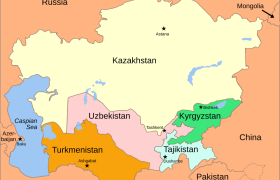
Today, Chabahar occupies a fundamentally different place in India’s foreign policy. Instead of the terminal point of Indian westward outreach, it marks the initial node of a resilient corridor resilient corridor strategy extending from the Arabian Sea to Russia via Caucasus and Central Asia through the International North South Transport Corridor (INSTC). The real transformation is not physical but conceptual: India is quietly replacing an Afghanistan-centric approach with a Eurasia-centric one.
The shift also responds to the evolving geopolitical landscape. The Taliban’s recent rise to power in Afghanistan decreased the strategic leverage of India’s earlier connectivity investments there. Simultaneously, Russia’s growing alienation from European transit routes, disruption of international maritime trade in the wake of the Red Sea crisis, and renewed rivalry for routes spanning transcontinental distances have increased the profile of alternative corridors. Amid these trends, Iran emerges as the geographic anchor of India’s resilience strategy through corridors, positioning New Delhi as capable of access to Eurasia via multiple routes rather than reliance on a single one.
Chabahar isn’t important because of the port itself so much as the entire network of transport infrastructure that the port sits atop. Indeed, its strategic advantage is a greater one of connectivity redundancy within a broader Indian context as opposed to the port being uniquely valuable in and of itself. Geographically speaking, however,Iran possesses something that diplomacy can’t give it, in the form of connectivity across regions no single alternative route can completely provide,and geography puts Iran in the position of supplying this capability, and as geography gives Iran something that dollar amounts can’t, diplomacy sees it being willing to keep paying. This can explain india’s willingness to keep going with chabahar even during the sanctions in the 2010-2015 timeframe: It gives India access into the north towards the russian Federation; to the west toward the Caucasus as well as to the East in central asia on shortest,most economic routed route connecting Indian Ocean through Iran into the interior of Eurasia.
The future importance of Chabahar may well be determined more by transport infrastructure radiating from the port than by the port itself. Continued Iranian investment in the Chabahar-Zahedan railway, and ultimate linking of the port to the Iranian rail network and hence the INSTC, illustrates that the project has evolved beyond maritime infrastructure into a continental logistics corridor. After completion of the links with the rail system further north toward Mashhad, to the Caspian, to Turkmenistan, Chabahar would no longer really be just a port but a southern entry-point of an intra-Eurasian transport link.
Thus, the strategic question for India is no longer what can match Gwadar. That is a battle of previous geopolitical paradigms. Instead, the issue becomes: can India shape Eurasia’s transport architecture before the competing corridor architectures become dominant?
India’s diplomacy also points to a recalibration of strategic autonomy from from reducing political dependence to reducing logistical dependence. The second India Iran Armenia Trilateral Consultations in New Delhi in December 2024 also highlighted connectivity for connectivity and connectivity cooperation under the INSTC framework, alongside Armenian “Crossroads of Peace” initiative as a supplement for connecting South Asia with Europe in the region. Armenia is no longer a peripheral partner but an increasingly important component of India’s Eurasian connectivity strategy.
This evolution also explains why the International North South Transport Corridor should not be understood as India’s alternative to the India Middle East Europe Economic Corridor. Many observers portray the two initiatives as competing geopolitical visions. The comparison misses a defining feature of India’s emerging strategy: New Delhi is investing in overlapping corridors rather than betting on a single route.Therefore, the INSTC and IMEC serve different geostrategic ends. The IMEC builds upon India’s maritime links to the west via the Arabian Peninsula into Europe. And the INSTC builds upon India’s continental reach across Iran to Russia, through the Caucasus and Central Asia.
Taken together, the INSTC and IMEC suggest that India is investing in strategic optionality rather than a single transport corridor. The example of Armenia further shows the increasing significance of the South Caucasus, and how Armenia has also become an increasingly key partner, providing India with an alternative route to Europe not excessively tied to specific states, in a move toward developing multiple strategic routes rather than just one.
Russia’s geopolitical situation has quickened the pace of this phenomenon, and the Western sanctions following the Ukraine conflict cut off the traditional south-bound supply routes of Russia, routing through the European continent. Consequently, the economic and strategic rationale of southern transport routes gained new emphasis. The INSTC is already on its way from an already-planned infrastructure project to a necessity for Russia. Russia’s growing dependence on southern trade routes has accelerated the strategic relevance of the INSTC for both Moscow and New Delhi.
India’s challenge is no longer strategic vision but implementation. However, some parts of this corridor still experience gaps in infrastructure, problems with customs clearance and transport logistics. In terms of the Chabahar Zahedan railway, which provides a necessary link from the port to the national rail network of Iran and onwards to Central Asia, has shown significant headway, however its progress is to be seen as only one essential element if the strategic dimension of the route is to be made fruitful. Upon completion it would turn Chabahar from merely isolated facilities in maritime area to the southern gateway of an integrated multimodal corridor throughout Eurasia.
Financial and political pressures remain as well. U.S. sanctions continue to complicate investment, insurance, banking and commercial participation in Iranian infrastructure. However, India’s continued commitment to Chabahar in the face of such uncertainty suggests that New Delhi increasingly looks at the venture through calculations of geopolitics, not just commerce. “The reward here is geopolitical flexibility, not just immediate commercial return.”
Understood within this larger vision of India’s geostrategic aspirations, Chabahar no longer represents solely India’s alternative to Gwadar nor solely the connection to Afghanistan. It is the southern access point to an emerging Eurasian vision to link India with diverse regions through diverse and redundant transport links.
“The real value of the INSTC is not the cutting of trade routes, but the conceptual redefinition of India’s grand strategy.” Instead of committing to one corridor New Delhi is steadily developing its resilient network of overlapping routes across Eurasia. In a future where logistics is increasingly a vector for geopolitical power, Chabahar represents not the end of India’s westward vision, but the first point within a broader strategy for India’s strategic resilience.
References
- Ministry of External Affairs, Government of India. India-Iran Sign Long-Term Contract on Chabahar Port. 13 May 2024.
- Ministry of External Affairs, Government of India. Second India-Iran-Armenia Trilateral Consultations. December 2024.
- Agreement on the International North-South Transport Corridor (INSTC). St. Petersburg, 12 September 2000.
- Government of Armenia. Crossroads of Peace Initiative. 2023.
- White House. Memorandum of Understanding on the India-Middle East-Europe Economic Corridor (IMEC). G20 Leaders’ Summit, New Delhi, 9 September 2023.
- United Nations Economic and Social Commission for Asia and the Pacific (UNESCAP). Operationalization of the International North-South Transport Corridor.
- United Nations Conference on Trade and Development (UNCTAD). Review of Maritime Transport 2024.
- Observer Research Foundation (ORF). Kabir Taneja. Chabahar Port and India-Iran Strategic Cooperation.
- Manohar Parrikar Institute for Defence Studies and Analyses (MP-IDSA). The International North-South Transport Corridor: Strategic Significance for India.
- Chatham House. The International North-South Transport Corridor and Eurasian Connectivity.
- Congressional Research Service (CRS). Iran Sanctions.
- Bruno Maçães. The Dawn of Eurasia: On the Trail of the New World Order. Penguin Random House, 2018.
- Parag Khanna. Connectography: Mapping the Future of Global Civilization. Random House, 2016.
- Shivshankar Menon. Choices: Inside the Making of India’s Foreign Policy. Penguin Random House India, 2016.
- Harsh V. Pant (ed.). India’s Foreign Policy: Challenges and Opportunities. Routledge.