

Author: Hassan Beheshtipour, Senior International Relations Analyst and Member of the Scientific Council at IRAS (The Institute for Iran-Eurasia Studies)
(IRAS Exclusive Analysis)
Introduction
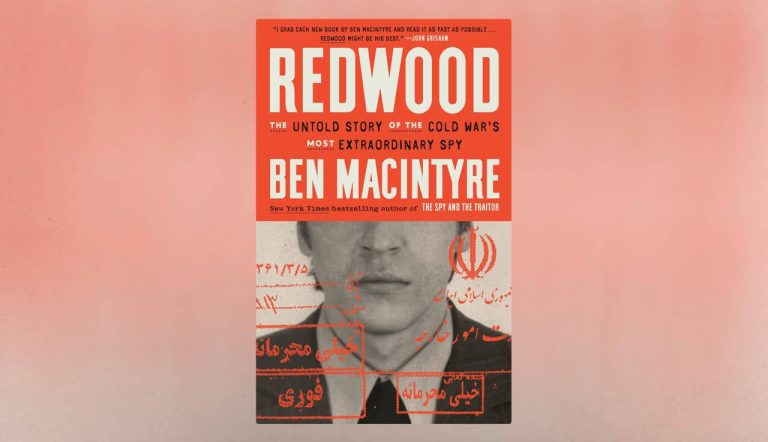
Forty-four years after Vladimir Kuzichkin, a KGB officer stationed in Tehran, defected from the Soviet Embassy to the British Interests Section in October 1981, Ben Macintyre—Associate Editor at The Times of London and bestselling author of Cold War espionage histories—published a volume in London titled Redwood: The Untold Story of the Cold War’s Most Extraordinary Spy. Macintyre claims to reveal previously undisclosed details seventeen years after Kuzichkin’s death in 2009. One day after the book’s release, on September 11, 2026 (20 Shahrivar 1405), he published an op-ed in The Washington Post under the provocative headline “How one Russian spy’s affliction in Iran shifted the Cold War,” presenting the volume’s most dramatic assertions to a general readership [1].
What warrants critical evaluation is not Kuzichkin’s defection itself, which remains an established and documented historical event, but rather the narrative architecture Macintyre constructs around it, along with the timing and geopolitical context of its publication. Macintyre has reopened this dossier after nearly four and a half decades, raising a pertinent question: why now? At a juncture when Iranian-Russian relations have expanded significantly and bilateral military cooperation has emerged as a central flashpoint in contemporary great-power competition, reviving the narrative of “clandestine Russian conspiracies against Iran”—framed around an account that casts Kuzichkin as the “savior-whistleblower” who thwarted a Soviet coup plot—inevitably acquires distinct geopolitical utility.
The release of the book and the accompanying essay was accompanied by coordinated, prominent coverage across major English-language media outlets: The New York Times, Financial Times, The Guardian, The Observer, and other publications published reviews and feature interviews in rapid succession [2, 3]. Such synchronized coverage suggests deliberate media framing. Macintyre—who possesses an established reputation in popular espionage history, understands the bureaucratic mechanics of intelligence agencies, and excels at character sketches of Soviet operatives—appears to have been selected to deliver this narrative framing, thereby laying the groundwork to reassert the historical “Russian threat.”
This critique does not seek to deny the structural links between the Tudeh Party, Moscow, and the KGB, nor does it dispute the existence of the party’s clandestine apparatus, its military wing, Kuzichkin’s defection, or the 1982–1983 (1361–1362 SH) suppression of the party. The core analytical concern is the empirical weight and verifiability of claims presented as definitive and cohesive in Macintyre’s narrative. Notably, accessible declassified records—including two British Foreign and Commonwealth Office (FCO) debriefing reports of Kuzichkin dating from December 1982—contain no reference to the Tudeh Party. Furthermore, available Soviet archival records contradict the thesis of a Central Committee-endorsed coup plot, while domestic pressure on the Tudeh Party had already escalated substantially by 1981. This indicates that Tehran’s decision to dismantle the organization was driven by multiple domestic and external variables rather than triggered solely by intelligence provided by a single defector. In this context, the domestic Iranian intelligence record—centered on the asset known in security files as “Source Eqbal”—warrants close historical examination.
- The Text Under Review
On September 11, 2026 (20 Shahrivar 1405), Ben Macintyre published an opinion piece in The Washington Post titled “How one Russian spy’s affliction in Iran shifted the Cold War” [1]. The essay represents an adaptation of his monograph, Redwood: The Untold Story of the Cold War’s Most Extraordinary Spy. “Redwood” was the British intelligence codename assigned to Vladimir Kuzichkin, the KGB officer in Tehran who defected to the United Kingdom in 1982 (1361 SH).
Macintyre (b. 1963, Oxford) is an Associate Editor at The Times and the author of popular non-fiction accounts of Cold War espionage, including Operation Mincemeat, A Spy Among Friends, and The Spy and the Traitor. He is neither an academic historian of intelligence nor a specialist in modern Iranian history; however, this distinction is not the primary basis of critique. Historical assertions must be evaluated by the quality and rigor of their primary evidence rather than an author’s professional credentials.
Macintyre’s source base comprises oral-history interviews with retired MI6 and CIA officers—most notably Ian McCredie (the MI6 officer in Tehran) and Howard Hart (the CIA station chief)—alongside select British archival files. Because Kuzichkin died in 2009, the narrative is filtered predominantly through Western intelligence perspectives. While reliance on intelligence practitioners does not inherently invalidate an account, it makes independent archival verification essential.
- Core Claims and Points of Contention
Based on published reviews and excerpts, Macintyre’s central narrative posits that Kuzichkin, acting as Moscow’s liaison with the Tudeh Party, approached McCredie and disclosed operational intelligence regarding a purported Tudeh plan to overthrow the Islamic Republic. MI6 subsequently dispatched Kuzichkin to Islamabad to convey this intelligence to Iranian representatives, with CIA operational participation. According to this account, the direct consequence was the arrest and execution of the Tudeh Party’s military wing and the expulsion of eighteen Soviet diplomats from Tehran [2, 3].
This critique does not dispute the historical realities of Tudeh–KGB ties, the party’s clandestine military network, Kuzichkin’s defection, or the 1982–1983 crackdown. Instead, the central analytical problem lies in the four-stage causal chain advanced in Macintyre’s thesis:
- Kuzichkin possessed actionable intelligence regarding the Tudeh clandestine network;
- He revealed an operational coup blueprint;
- This disclosure determined the Islamic Republic’s decision to suppress the Tudeh leadership and purge affiliated military personnel;
- Kuzichkin’s disclosures averted direct Soviet military intervention and a wider superpower confrontation.
Each of these propositions requires independent empirical substantiation; establishing the validity of the first does not confirm the accuracy of subsequent links.
A methodological distinction is also necessary. “Impact” in this historical episode encompasses three analytically distinct questions that must be assessed separately:
- The impact on the strategic decision to ban and dismantle the Tudeh Party;
- The impact on the operational execution of the crackdown (the rapidity, breadth, and coordination of arrests); and
- The impact on the diplomatic expulsion of Soviet personnel from Iran.
- What the Archival Record Demonstrates—and What It Omits
Debriefing Reports
In a study published in Iranian Studies (2022) drawing upon Soviet Communist Party archives, published memoirs, and the Mitrokhin Archive, Dmitry Asinovskiy examined two British FCO debriefing reports of Kuzichkin: one compiled by Sir Julian Bullard (December 16, 1982) and another by Alan Goodison (December 17, 1982), cataloged under file FCO 28/5181, folios 32 and 33 [4, 5]. In these records, the lines of questioning centered almost exclusively on internal Soviet political dynamics, national minorities, and foreign policy; neither report contains any reference to the Tudeh Party. While the comprehensive transcripts of Kuzichkin’s debriefings remain classified—referenced by Asinovskiy under file FCO 49/1041—he concludes that the probability that Kuzichkin’s debriefings decisively shaped Iran’s decision to move against the party is remarkably low [4, 5].
Limitations of This Evidence
These FCO documents reflect only one bureaucratic channel: post-defection diplomatic debriefings conducted by foreign ministry officials. Macintyre’s thesis relies on a separate channel: pre-defection operational contacts with MI6 in Tehran and the purported liaison meeting in Islamabad. Such operational exchanges would be documented in MI6 and CIA files rather than FCO diplomatic correspondence. As Asinovskiy acknowledges, archival limitations leave open the question of whether Kuzichkin shared intelligence regarding Soviet–Tudeh connections prior to his formal FCO debriefings, and the two declassified FCO sessions were almost certainly not exhaustive. Consequently, the most rigorous historical deduction is that while Macintyre’s claims find no corroboration in accessible declassified archives, they cannot be categorically refuted based solely on the diplomatic files currently in the public domain [4].
Provenance of the “Kuzichkin Betrayal” Narrative
Asinovskiy demonstrates that the narrative attributing the Tudeh Party’s downfall to Kuzichkin circulated within Iranian diaspora networks well before an anonymous KGB officer’s 1991 interview with Moskovskie Novosti, finding early proponents among former SAVAK generals. Drawing upon Mehrdad Khonsari’s doctoral dissertation (LSE, 1995), Asinovskiy notes that former generals Mohsen Mobasser and Manouchehr Hashemi claimed to have received this account from the head of SAVAMA’s Soviet desk. In the Western press, the claim first appeared in Jack Anderson and Dale Van Atta’s syndicated column in The Washington Post on April 3, 1985 [6]. It surfaced again on November 19, 1986, when Bob Woodward detailed CIA operational assistance in passing defectors’ intelligence to Tehran during the Iran-Contra scandal [4, 6].
The Iranian diaspora origins of this account do not inherently disprove its veracity; rather, historical credibility depends upon the verifiability of the chain of transmission. In this case, the transmission chain relies on three links: an unnamed SAVAMA official, exiled monarchist generals, and Dr. Khonsari’s academic dissertation. Furthermore, the 1985 Washington Post column alleged that Kuzichkin established contact with British intelligence in early 1982 as an active double agent—a timeline that conflicts with Kuzichkin’s own published memoir, which describes a sudden, panicked defection following the loss of classified embassy documents [4, 6].
- Domestic Pressure on the Tudeh Party Prior to Kuzichkin’s Defection
Archival documentation analyzed by Asinovskiy establishes that domestic pressure on the Tudeh Party was already mounting systematically throughout 1981. In July 1981, Soviet Ambassador to Washington Anatoly Dobrynin acknowledged in a diplomatic exchange with U.S. Secretary of State Alexander Haig that the Iranian communist left was being put through “the meat grinder” [7].
Domestically, beginning in the spring of 1982 (1361 SH), the Iranian press initiated sustained ideological and political attacks against the Tudeh Party. In Mordad 1361 (July–August 1982), the party’s official publication, Ettehad-e Mardom, was banned. Around the same time, Tudeh First Secretary Noureddin Kianuri warned the party leadership that a total state ban was imminent, prompting the central apparatus to draft contingency plans for going underground and arranging emergency extraction routes for senior cadres.
These developments demonstrate that the state’s decision to launch a comprehensive crackdown on the Tudeh Party was multi-causal, emerging from domestic political realignments rather than relying exclusively on Kuzichkin’s defection. Nevertheless, the strategic decision to dismantle the party must be distinguished from the operational execution and tactical velocity of the crackdown. The first wave of arrests occurred on February 6, 1983 (17 Bahman 1361)—roughly four months after Kuzichkin arrived in the United Kingdom. As documented by Asinovskiy, approximately 6,000 party members and the entirety of the senior political leadership were detained within days. Despite their contingency preparations, the speed and scope of the operation caught the Tudeh leadership off guard [4].
Asinovskiy considers it plausible that Kuzichkin may have supplied operational details concerning the Tudeh leadership’s emergency evacuation plans, as Kuzichkin acknowledged in his memoirs that his KGB duties included document forgery and planning clandestine border-crossing routes. He may also have compromised KGB intelligence officers operating under diplomatic cover, thereby contributing to the expulsion of eighteen Soviet diplomats in May 1983 (Ordibehesht 1362). Asinovskiy treats this strictly as a plausible working hypothesis rather than an empirically verified certainty. Thus, while Kuzichkin’s operational role in the timing and execution of arrests remains an open historical inquiry, this does not imply that his intelligence was irrelevant. What remains unsupported by available evidence is the claim that his disclosures were the singular, decisive factor in Tehran’s decision to suppress the Tudeh Party on espionage charges—and particularly the sensational claim of an active, Moscow-directed coup plot against the Islamic Republic [4].
- Pre-Existing Iranian Intelligence Awareness
A critical domestic Iranian perspective on these events is provided in Saye-ye Sorkh: Sargozasht-e Tashkilat-e Makhfi-ye Hezbe Tudeh-ye Iran 1353 ta 1362 [Red Shadow: The History of the Clandestine Apparatus of the Tudeh Party of Iran, 1974–1983] by Mohammad-Amin Farajollahi (Institute for Political Studies and Research, 1403 SH / 2024) [8]. Chapter Six documents that prior to the 1979 Revolution, SAVAK’s Eighth Bureau (Counter-Intelligence) recruited a Soviet intelligence officer in Tehran, designated in intelligence records as “Source Eqbal” (Manba’-e Eqbal).
According to this documentation, “Source Eqbal” remained operational following the 1979 Revolution, providing intelligence to the newly established Prime Ministry’s Office of Information and Research. This source identified Gagik Avanesian (KGB codename: “Tabatabai”) as the primary operational liaison between Kianuri and Soviet intelligence. Iranian security agencies reportedly maintained physical and technical surveillance over Avanesian from 1979 (1358 SH) until his arrest in 1982 (1361 SH) [8].
If this account is accurate, the operational liaison channel between the Tudeh leadership and the KGB was compromised and actively monitored by Iranian security organs years before Kuzichkin defected. Two analytical caveats are necessary here:
- In Farajollahi’s published study, the recruitment of “Source Eqbal” is substantiated by pre-revolutionary SAVAK archives, whereas post-revolutionary operational continuity relies primarily on retrospective interviews with knowledgeable security figures.
- General awareness of a structural relationship does not necessarily provide actionable, tactical intelligence on clandestine cells. A critical historiographical question remains: if Iranian counter-intelligence possessed operational knowledge of this liaison channel as early as 1979, why was the comprehensive crackdown on the Tudeh apparatus deferred until February 1983?
- The “Coup Plot” Allegation in Iranian Records
Chapter Seven of Farajollahi’s study demonstrates that the most dramatic allegations of an operational “coup plot”—involving the targeting of key leadership figures and the establishment of a clandestine command center—surfaced domestically during the interrogation of Tudeh cadre Houshang Asadi months after the initial arrests [9].
According to the memoirs of Akbar Hashemi Rafsanjani, Ayatollah Ruhollah Khomeini dismissed this specific coup narrative as “entirely unfounded” [10]. Tellingly, in the final indictment presented by Military Prosecutor Mohammad-Reza Reyshahri, the formal charge of an attempted “coup d’état” was entirely absent. The actual indictments cited “subversive actions against the state,” “espionage on behalf of a foreign power,” “unlawful acquisition and stockpiling of weaponry,” and “violation of statutory prohibitions against military personnel joining political parties” [11]. Furthermore, during the televised confessions of the Tudeh leadership, senior officials consistently and emphatically denied having planned a coup d’état.
- Soviet Policy Toward the Iranian Revolution
A further counterweight to the narrative of a Soviet-backed coup plan emerges from Soviet state archives. Drawing upon the records of the CPSU Politburo and Central Committee, Asinovskiy demonstrates that Moscow’s strategic doctrine toward post-revolutionary Iran was centered on backing Ayatollah Khomeini’s uncompromising anti-American foreign policy. The International Department of the Central Committee had explicitly tasked the KGB with facilitating the creation of a broad “United Front of Progressive Forces” aligned with the Tudeh Party. In subsequent years, the KGB’s role was largely confined to courier operations—facilitating financial transfers and diplomatic messages between the Central Committee and the Tudeh leadership [4].
According to Asinovskiy, proposals by Karen Brutents, Deputy Head of the International Department, to leak documentation regarding the mistreatment and torture of imprisoned Tudeh leaders to Western media were repeatedly vetoed by the Politburo, which prioritized maintaining state-to-state relations with Tehran [4]. Furthermore, contemporaneous British diplomatic reporting aligns with this assessment: Nicholas Barrington, the British Chargé d’Affaires in Tehran, noted that the Kremlin appeared prepared to “sacrifice” the Tudeh Party if necessary to safeguard its wider strategic relationship with Iran [4].
The archival evidence marshaled by Asinovskiy stands in direct contradiction to Macintyre’s characterization of a Central Committee-backed overthrow operation designed to prepare the ground for Red Army intervention.
- An Alternative Analytical Hypothesis
Facing an increasingly unavoidable confrontation throughout 1982, the Tudeh Party was actively preparing for organizational crisis: constructing underground networks, preparing emergency border-crossing routes, and producing forged identity documents. As Kuzichkin noted in his memoirs, his KGB responsibilities included assisting with these logistical preparations.
If Kuzichkin conveyed these contingency measures to MI6, it is plausible that along the transmission chain linking Western intelligence services to SAVAMA (from MI6 to the CIA and onward to Tehran), the party’s “emergency crisis preparations” were reinterpreted—or deliberately embellished—as an active “operational coup plot.” This hypothesis reconciles the documentary realities of Soviet foreign policy with the fact that substantive intelligence was indeed transferred between services. However, this remains a working hypothesis subject to further archival corroboration.
- Critical Questions Unaddressed in Macintyre’s Narrative
To establish historical credibility, Macintyre’s thesis must resolve several critical empirical questions:
- Scope of Intelligence: What precise categories of intelligence did Kuzichkin possess and disclose: the existence of the clandestine network, the roster of the military wing, concealed arms caches, an operational coup blueprint, contingency evacuation routes, or the identities of undercover KGB officers?
- Documentary Corroboration: Does any documentary evidence substantiate that Kuzichkin conveyed Moscow-issued operational directives, designated tactical targets, operational timetables, a unified command structure, or phase-by-phase execution plans for the alleged coup?
- Timeline of Contact: When did Kuzichkin’s initial operational contact with Ian McCredie occur? Macintyre’s book dates this to 1981, whereas contemporaneous reporting in The Washington Post in 1985 indicates early 1982 [6].
- Defection Motive: What is the evidentiary basis for the defection motive emphasized in The Washington Post op-ed title (“affliction” / personal health and vulnerabilities), and how does this align with Kuzichkin’s published memoir, which attributes his defection to panic over misplaced sensitive files?
- Casualty Figures: What primary sources verify the casualty figures cited for arrests and executions? While earlier literature cited “over one thousand” detentions, Asinovskiy’s archival research estimates approximately 6,000 arrests [4].
- Conclusion
From the available archival record, several conclusions can be affirmed with historical confidence:
- The structural ties between the Tudeh Party, the Soviet Union, and the KGB were well known to Iranian security agencies both prior to and following the 1979 Revolution;
- State pressure on the Tudeh Party escalated steadily from 1981 onward, demonstrating that the decision to dismantle the organization was multi-causal and not uniquely dependent on Kuzichkin’s disclosures;
- The two declassified British FCO debriefing reports of Kuzichkin contain no reference to the Tudeh Party;
- Available Soviet Communist Party archives are inconsistent with the narrative of an operational coup plot sanctioned by the Central Committee;
- The most explicit narrative of an operational “coup plot” in Iranian sources emerged from post-arrest interrogations that have been fundamentally challenged by contemporary archival researchers examining original security dossiers in Saye-ye Sorkh [8, 9].
Conversely, the historical record cannot definitively rule out:
- That Kuzichkin played a tactical role in the timing, operational efficiency, or target selection of the February 1983 arrests, or in the subsequent expulsion of Soviet diplomats—possibilities explicitly left open by Asinovskiy [4];
- The theoretical existence of contingency plans within Soviet military-intelligence planning for unexpected regional emergencies;
- The precise nature and extent of the operational intelligence Kuzichkin passed to MI6 prior to his defection, as operational files of Western intelligence services remain classified.
The “savior-whistleblower” archetype central to Macintyre’s narrative remains unverified and presents a far more complex historical reality than depicted in popular media accounts. A definitive assessment of this Cold War episode must await the declassification of operational MI6 and CIA files, as well as Iranian state documentation regarding the Islamabad exchanges and the comprehensive debriefing logs of “Source Eqbal.”
References
- Ben Macintyre, “How one Russian spy’s affliction in Iran shifted the Cold War,” The Washington Post, 11 September 2026.
- Reviews of Redwood republished on MSN and publisher promotional material (Publishers Weekly).
- Interview with Ben Macintyre, Sunday Post, September 2026.
- Dmitry Asinovskiy, “‘A Priest Does Not Consider the Toppling of the Shah as an Option’: The KGB and the Revolution in Iran,” Iranian Studies 55, no. 4 (2022): 929–951. DOI: 10.1017/irn.2022.23. Notes 79–81.
- Ibid., main text, p. 946.
- Jack Anderson and Dale Van Atta, “Defection Hurt Iranian Communists,” The Washington Post, 3 April 1985.
- Memorandum of Conversation, 2 July 1981, Foreign Relations of the United States (FRUS), 1981–1988, vol. III, doc. 66.
- Mohammad-Amin Farajollahi, Saye-ye Sorkh: Sargozasht-e Tashkilat-e Makhfi-ye Hezbe Tudeh-ye Iran 1353 ta 1362 [Red Shadow: The History of the Clandestine Apparatus of the Tudeh Party of Iran, 1974–1983], Institute for Political Studies and Research (IPSR), 1403 SH [2024], pp. 272–282.
- Ibid., pp. 304–307.
- Akbar Hashemi Rafsanjani, Aramesh va Chalesh: Karnameh va Khaterat-e Sal-e 1362 [Tranquility and Challenge: Record and Memoirs of the Year 1362], Ma’aref Enqelab Publications, p. 16.
- Ettela’at newspaper, 27 Dey 1362 [17 January 1984], Press conference of Ayatollah Reyshahri, p. 15.