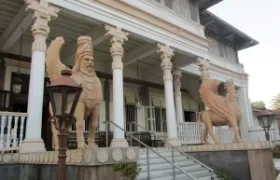

Naqsh-e Jahan Square of Isfahan; The Image of the World

Fewer squares in the world can be found that, as much as Naqsh-e Jahan Square, have showcased the harmony among politics, religion, economics, and art. This square was built in the early 17th century by the order of Shah Abbas I of the Safavid dynasty, and with a length of 560 meters and a width of 160 meters, it is considered one of the largest historical squares in the world.
On the four sides of this square lie the most important symbols of the Safavid government: the Imam Mosque, the Sheikh Lotfollah Mosque, the Ali Qapu Palace, and the Qeysarie Gate, which is the entrance to the Grand Bazaar of Isfahan. This combination had transformed the square into the center of government, commerce, religion, and social life. In the past, polo matches, royal celebrations, the welcoming of foreign ambassadors, and even public music performances were held in this square. Today as well, Naqsh-e Jahan, registered on the UNESCO World Heritage list, is one of the most prominent examples of Islamic and Iranian urban planning.
The Registan of Samarkand; The Magnificence of the Timurid Renaissance
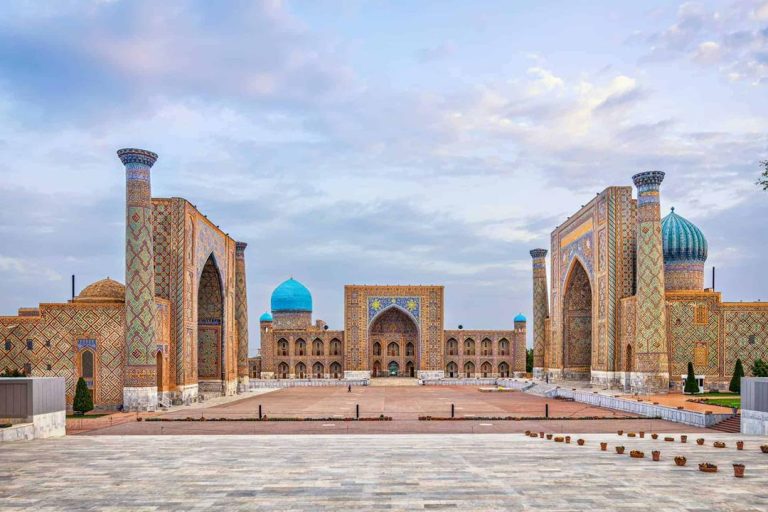
If Naqsh-e Jahan is the symbol of Safavid magnificence, the Registan of Samarkand can be considered the heart of Timurid civilization. This historical square, whose name means ‘Sandy Place’, was the scientific, educational, and political center of Samarkand from the 15th century.
The three magnificent madrasas of Ulugh Beg, Sherdor, and Tilya-Kori, built around the square, are considered masterpieces of Islamic architecture in Central Asia. The Registan was not only a place for teaching sciences; government decrees, official ceremonies, and public gatherings were also held in this very square. Its turquoise tiling, tall domes, and massive portals have turned the Registan into one of the most recognized cultural symbols of Eurasia.
Republic Square of Yerevan; The Nexus of Tradition and Modernity
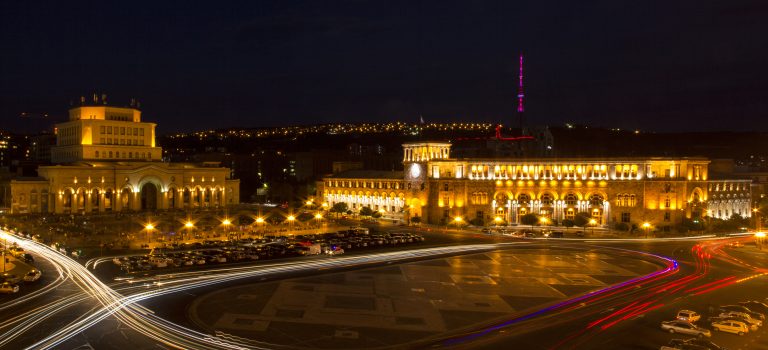
In the heart of Armenia’s capital lies Republic Square; a square that took shape with the design of the prominent architect, Alexander Tamanian, in the 1920s and is considered the most important public space in Yerevan today.
The architecture of this square, using pink tuff stone, has granted a unique identity to the city. The Government Building, the History Museum of Armenia, and the National Gallery are situated around it, and the square’s musical fountains become one of the city’s tourist attractions every night. In addition to its administrative function, Republic Square is the venue for national celebrations, concerts, and important political and social events of Armenia.
Azadliq Square of Baku; The Contemporary Face of the Republic of Azerbaijan
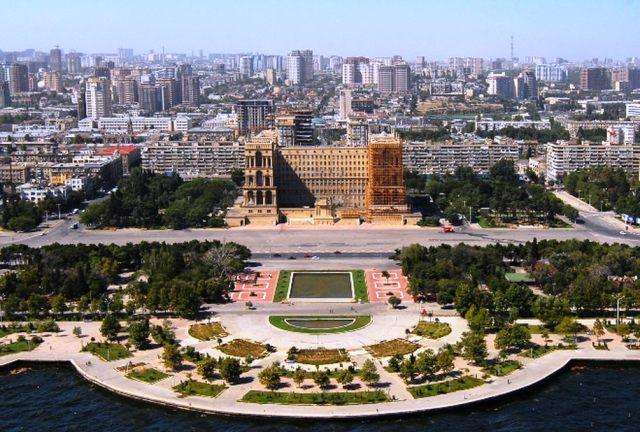
On the shores of the Caspian Sea, Azadliq Square of Baku is considered one of the largest urban squares in the Caucasus region. Although this square does not possess a history as ancient as Naqsh-e Jahan or the Registan, in recent decades it has become the symbol of the Republic of Azerbaijan.
This square hosts military parades, national celebrations, grand concerts, and official government ceremonies, and due to its proximity to the Baku Boulevard, it offers a beautiful view of the Caspian Sea. The modern architecture around the square presents an image of Baku’s new and development-oriented identity.
Independence Square of Astana; The Symbol of Modern Kazakhstan

With the transfer of Kazakhstan’s capital to Astana, a series of new squares and urban spaces took shape, the most important of which is Independence Square. This square is located next to the Palace of Peace and Reconciliation, the Hazrat Sultan Mosque, and the ‘Kazakh Eli’ monument, reflecting Kazakhstan’s effort to connect its steppe heritage with contemporary architecture.
Today, this square is the venue for national celebrations, official ceremonies, and cultural events of Kazakhstan, and in its design, concepts of national identity and futurism play a prominent role.
Squares; The Living Memory of Eurasian Cities
Despite historical and cultural differences, the grand squares of Eurasia share a common characteristic; they are not merely urban spaces, but rather they harbor the historical memory of nations. In these squares, governments have showcased their power, merchants have offered their goods, artists have created art, and people have gathered in celebrations, rituals, and the decisive moments of history.
From Naqsh-e Jahan in Isfahan to the Registan in Samarkand, from Republic in Yerevan to Azadliq in Baku, these squares continue to narrate the story of civilizations that took shape across the vast expanse of Eurasia and influenced global culture.