

On January 26, 1972, an incident occurred in the skies over former Czechoslovakia that etched the name of a flight attendant in history forever. Vesna Vulović, a 23-year-old flight attendant for Yugoslav Airlines (JAT), survived a fall that, according to the laws of physics and medicine, was completely impossible to survive. She fell from an altitude of 33,333 feet (10,160 meters) without a parachute and lived; a record that remains unbroken in the Guinness Book of Records even after more than 50 years.
In this article, we take a look at the details of this horrific incident, the scientific reasons for Vesna’s survival, and her strange fate after this miracle.
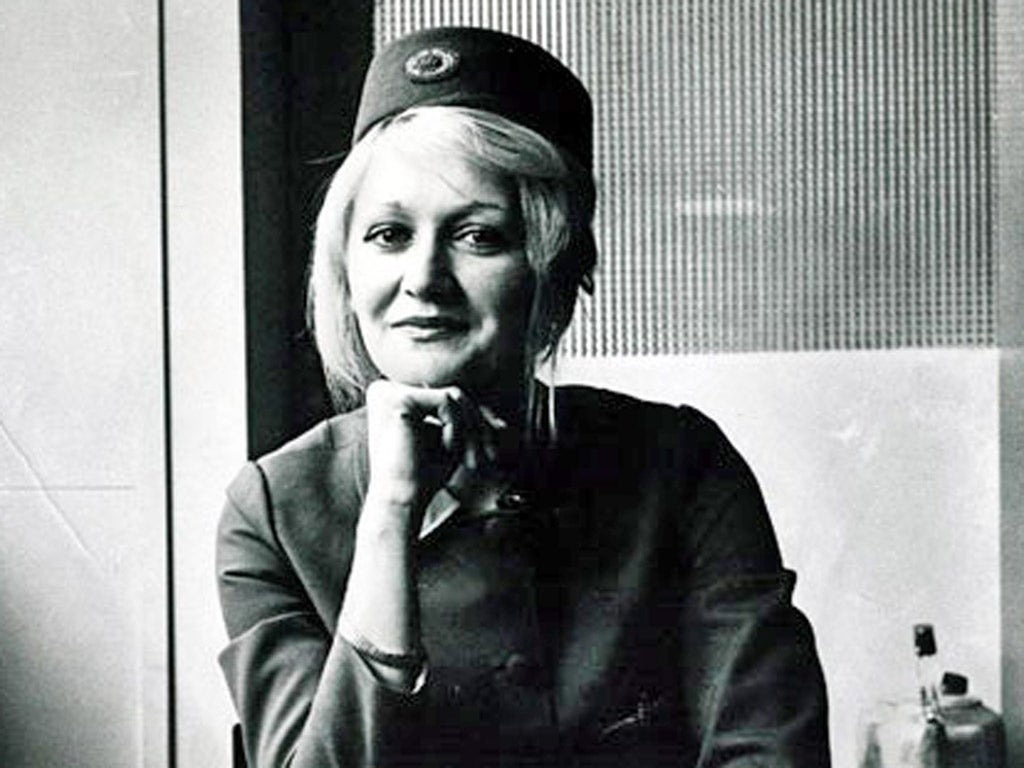
Vesna Vulović, Flight Attendant on Yugoslav Flight 367
Flight 367 Incident Profile at a Glance
| Feature | Incident Details |
| Date of Incident | January 26, 1972 |
| Aircraft Type | McDonnell Douglas DC-9 |
| Flight Route | Stockholm (Sweden) to Belgrade (Serbia) |
| Fall Altitude | 33,333 feet (10,160 meters) |
| Number of Survivors | 1 person (Vesna Vulović) out of 28 passengers and crew |
The Mistake That Sealed Vesna’s Fate
The strange thing is that Vesna Vulović was never supposed to be on Flight 367 that day! In a 2002 interview, Vesna revealed that the airline had mistaken her for another flight attendant with the same name. Thus, she boarded the plane from Copenhagen instead of her colleague; a mistake that sent her into the heart of one of the greatest aviation disasters in history.
Forty-six minutes after takeoff, at 4:01 PM, a bomb hidden in the cargo hold exploded, tearing the plane into three pieces in mid-air. With the sudden drop in cabin pressure, the passengers and other crew members were sucked out of the plane into freezing temperatures and perished. But Vesna had a different fate.
Vesna Vulović, the flight attendant who survived a 10,000-meter fall

The Secret of Survival; How Does a Human Survive a 10-Kilometer Fall?
Doctors and aviation experts, after careful examinations, attributed Vesna’s miraculous survival to a combination of pure luck and physical factors:
Being trapped in the tail of the fuselage: Vesna was pinned by a food cart in the rear section of the fuselage, which prevented her from being sucked out.
Favorable impact angle: The fuselage crashed in a heavily forested area covered in thick snow near the village of “Srbská Kamenice” in Czechoslovakia. The fuselage’s impact with the trees and deep snow at a favorable angle absorbed much of the shock.
Vesna’s low blood pressure: Doctors discovered that Vesna naturally had low blood pressure. This trait caused her to pass out immediately after the cabin pressure dropped, preventing her heart from bursting upon the severe impact with the ground.
A former World War II medic named “Bruno Honke,” who lived in the area, was the first person to hear Vesna’s screams from amidst the wreckage and administered vital first aid to her before rescue teams arrived.
Severe Injuries and a Miraculous Return to Life
Although Vesna survived, her body sustained severe injuries. She spent several days in a coma and suffered a fractured skull, two broken legs, three broken vertebrae, a fractured pelvis, several broken ribs, and temporary paralysis from the waist down.
However, her fighting spirit allowed her to regain the ability to walk just 10 months later; though due to spinal injuries, she walked with a slight limp for the rest of her life. She later stated that she had no memory of the moment of the crash or the month following it.

Vesna Vulović hospitalized
What Was the Cause of the Explosion? Rumor or Reality?
The Czechoslovak Civil Aviation Authority announced that the cause of the explosion was a time bomb planted inside a briefcase in the baggage hold. Yugoslav authorities suspected a Croatian terrorist group called the Ustaše, as the following day, an anonymous caller contacted a Swedish newspaper and claimed responsibility for the bombing on behalf of Croatian nationalists.
There were also rumors that the plane had been mistakenly shot down by Czechoslovak air defense missiles at a lower altitude. But this conspiracy theory was completely debunked by extracting data from the plane’s black box. Experts from Yugoslavia, Czechoslovakia, and the Netherlands confirmed that the plane fell from exactly that altitude of 33,333 feet.
The Legacy of an Anti-War Hero and Symbol of Hope
Vesna became a national symbol in her country. In 1985, Paul McCartney (the famous singer of The Beatles) even presented her with the Guinness Book of Records medal and certificate for the highest fall survived without a parachute.
After recovering, she continued working at the JAT airline’s desk but was fired in the early 1990s for participating in protests against the government of Slobodan Milošević (the then-President of Serbia). Until the end of her life in December 2016, when she passed away at the age of 66, Vesna was recognized as a peace activist and a champion against nationalism.
Compiled and translated by: Mohammad Mehdi Heydarpour/Asr Iran