
Introduction
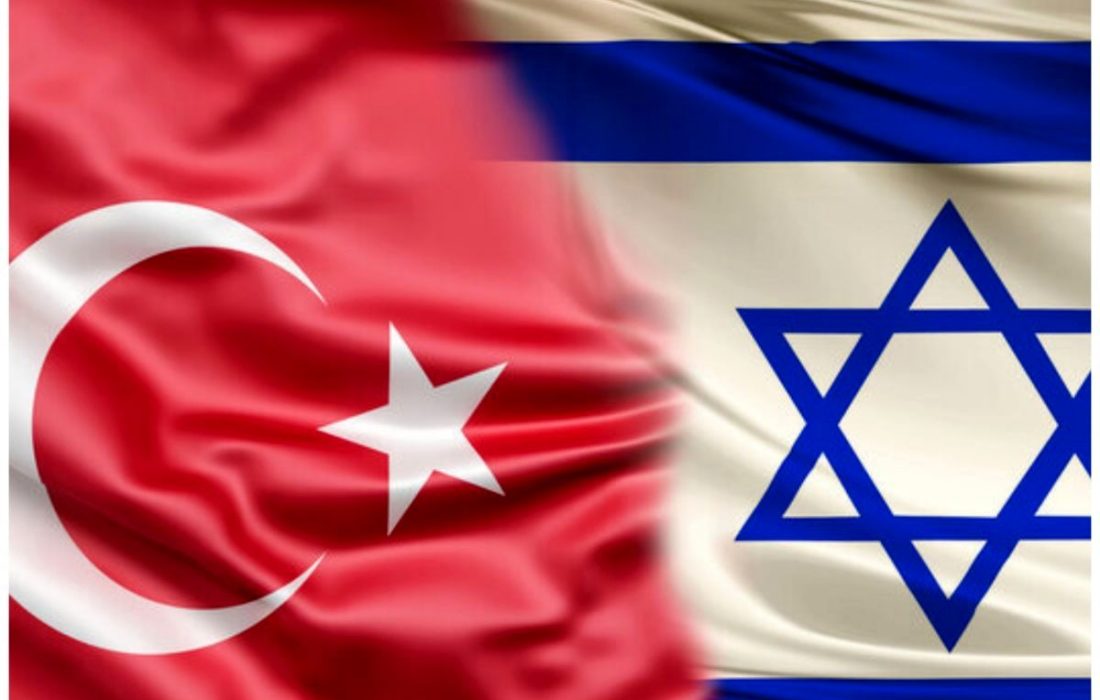
Following recent political and security shifts, Syria has once again emerged as a critical theater of regional power competition. The expanding footprint of Turkey within Syria’s political, security, and military architecture on the one hand, and Israel’s drive to preserve its operational freedom and secure a favorable strategic periphery along its borders on the other, have established one of the most consequential new fault lines in the Middle East.
Although Turkey and Israel have avoided direct military confrontation in Syria to date, developments in August 2026 indicate that the risk of an unintended clash between their forces is no longer merely theoretical. The Israeli airstrike on the Abu al-Duhur airbase in Idlib province on August 18 served as the most salient recent illustration of this dynamic. Israel asserted that the strike was intended to preempt the establishment of new military capabilities at the base and in response to the potential deployment of Turkish personnel and assets. In response, Ankara condemned the strike as a violation of Syrian sovereignty and territorial integrity. Concurrently, reports revealed that Washington has been actively working to institute a mechanism to avert direct military clashes between Turkey, Israel, and Syria.
From this vantage point, the core issue is no longer solely Turkey’s presence in Syria or Israel’s ongoing strikes against targets inside the country. Rather, Syria has evolved into a strategic space where two divergent security doctrines are converging. The ongoing rivalry has entered a critical juncture where managing clashes has become just as vital as managing influence.
Syria: The New Arena of Competition Between Ankara and Tel Aviv
The strategic significance of Syria is not identical for Turkey and Israel, yet their interests increasingly intersect across multiple domains. For Turkey, Syria constitutes an immediate component of its national security environment. Developments across northern Syria, the status of Kurdish factions, the security of its southern border, and the future orientation of Syria’s political and military apparatus directly impact Turkey’s vital security interests. Ankara has also sought to support Syria’s evolving political structure, playing a central role in rebuilding state institutions, particularly defense and security bodies. Beyond immediate security considerations, reconstructing Syrian infrastructure, securing lucrative commercial contracts, and establishing a safe framework for the repatriation of Syrian refugees—who place a substantial strain on the Turkish economy—remain strategic priorities for Ankara.
Within this framework, expanding defense and security cooperation between Damascus and Ankara could lay the groundwork for a broader strategic alignment. The significance of this dynamic for Israel lies in the fact that Turkey is not merely another external actor operating in Syria; it is a formidable regional military power and a NATO member whose entrenched presence could directly dictate Syria’s future security posture. Conversely, Israel evaluates Syria primarily through the lens of national defense, the stability of its northern border, the status of the Golan Heights, arms transfers, and the emergence of hostile military capabilities. While Israel has systematically targeted military infrastructure in Syria over the years, Turkey’s growing role introduces a novel variable for Tel Aviv—one that is far more complex to manage than non-state armed groups. Consequently, this emerging competition reflects the collision of two contrasting security paradigms: Turkey seeks to actively shape Syria’s security architecture, whereas Israel aims to preempt any military capability within Syrian territory that it assesses as detrimental to its security.
The Abu al-Duhur Strike: A Sign of Israel’s Heightened Sensitivity to Turkey’s Role
The Israeli strike on the Abu al-Duhur airbase on August 18 underscored Tel Aviv’s heightened sensitivity toward Turkey’s expanding military role in Syria. During the operation, Israeli fighter jets struck the facility multiple times, damaging runways and logistical installations. Israel claimed Damascus intended to alter the status quo by facilitating a Turkish presence at the base. However, this assertion was not definitively confirmed by either Damascus or Ankara, with divergent accounts emerging regarding the exact nature and purpose of any prospective Turkish deployment.
The significance of the Abu al-Duhur strike extends beyond infrastructural damage; it demonstrated the tangible potential for an operational collision between Israeli air operations and Turkey’s security footprint in Syria. The incident was treated with gravity in Washington, which moved swiftly to pursue a tripartite deconfliction mechanism among Turkey, Israel, and Syria. Senior US administration officials noted that a lack of operational coordination substantially elevated the risk of direct confrontation between Turkey and Israel. Abu al-Duhur must therefore be viewed not as an isolated tactical operation, but as an inflection point signaling a new phase in Turkish-Israeli competition—one where limited tactical actions can generate outsized strategic repercussions.
The Role of Russia: A Silent yet Influential Observer
Alongside the United States, Russia—as Turkey’s strategic interlocutor within the Astana framework and a power maintaining vital military facilities in Syria—cannot remain indifferent to this rivalry. Moscow prefers this competition to remain strictly managed, as any uncontained military collision between Turkey and Israel would complicate the Kremlin’s operational calculus in Syria. Russia’s relative restraint following the Abu al-Duhur strike reflects a calculated strategy to avoid entanglement in a costly proxy confrontation. However, should tensions escalate beyond manageable thresholds, Moscow retains the leverage to act either as a de-escalation broker or as a factor that further complicates the strategic balance.
From Competing for Influence to Managing Clashes
A key diplomatic development following the Abu al-Duhur strike was the US effort to establish an operational deconfliction mechanism among the involved parties. The objective of such a mechanism is to reduce the risk of strategic miscalculation, institute direct communication channels, and avert inadvertent military engagements. The necessity of this mechanism is amplified by the fact that Turkey and Israel are advanced conventional military powers, making the fallout of any direct engagement far more consequential than encounters with non-state actors.
Nevertheless, an analytical distinction must be drawn between deconfliction and the mitigation of rivalry. The establishment of communication channels between Turkey and Israel does not equate to the resolution of their structural differences. Such mechanisms function primarily as instruments of crisis management, allowing both states to pursue their competitive objectives while avoiding accidental breaches of established red lines. In practice, the Turkish-Israeli dynamic in Syria has expanded from managing influence to actively managing the risk of direct operational clash.
The US Role: Mediator or Crisis Manager?
The United States occupies a unique position in this strategic matrix. Washington maintains a long-standing alliance with Turkey within NATO while preserving a close strategic partnership with Israel. Consequently, a direct confrontation between the two states would incur steep political and security costs for the United States. In the wake of the Abu al-Duhur strike, Washington sought to prevent escalation by facilitating communication channels among Turkey, Israel, and Syria, reflecting the seriousness with which it views friction between its regional partners.
However, the US posture cannot be understood solely as neutral mediation. While working to avert direct conflict, Washington simultaneously seeks to preserve its own influence over Syria’s emerging security arrangements. Managing Turkish-Israeli friction thus forms part of a broader US effort to shape the post-conflict Syrian security architecture.
Syrian-Israeli Technical Talks: Damascus’ Effort to Contain Crisis Escalation
Another significant development following the Abu al-Duhur strike was the convening of low-level technical discussions between Syria and Israel, mediated by the United States on August 23. While these meetings should not be construed as political normalization talks, they demonstrated Damascus’ intent to establish operational channels to prevent Syrian territory from becoming an open battleground for regional powers.
This development highlights that Syria is not merely a passive theater for Turkish and Israeli maneuvering. Damascus retains its own strategic calculations, seeking to leverage external power competition to rebuild its security and defense capabilities and consolidate its domestic authority. The August 23 technical discussions focused primarily on establishing operational deconfliction protocols across Syrian airspace and territory, signaling a shared awareness of the risks of unmanaged escalation.
Consequently, Syria is shifting from a passive battleground into an active participant in regional calculations. The Syrian government faces the dual imperative of deepening security cooperation with Turkey while managing Israeli concerns regarding border stability and military capabilities. This positions Damascus at the center of a complex multilateral dynamic involving Turkey, Israel, Russia, the United States, and Iran, each pursuing distinct strategic objectives.
Why Is Israel Concerned About Turkey’s Expanding Role?
Israel’s apprehension regarding Turkey’s expanding footprint operates across three distinct levels. Geographically, the expansion of Turkish military infrastructure across northern and northwestern Syria reduces the operational buffer between the two militaries, increasing the likelihood of friction. In terms of military capabilities, Turkey possesses one of the region’s most formidable conventional armed forces, meaning that an operational encounter involving Turkish and Israeli systems or personnel carries fundamentally different strategic risks than Israeli operations against non-state militias. Institutionally, if Turkey assumes a central role in restructuring Syria’s armed forces and security apparatus, Ankara’s leverage in Damascus will evolve from a transient military presence into long-term structural influence, shifting the regional balance of power in ways Tel Aviv views with deep concern. While attributing a single, definitive motive to Israeli operations remains reductive, it is evident that Israel remains highly sensitive to the emergence of new military capabilities in Syria, a concern made more complex by Turkey’s growing role.
Will Syria Become a Direct Battleground Between Turkey and Israel?
In the near term, the probability of a large-scale direct war between Turkey and Israel remains low. The costs of such a confrontation are prohibitive for both sides, and both Washington and Moscow have strong incentives to prevent an open clash. However, a low probability of total war does not preclude localized, limited engagements. Targeted retaliatory operations, intelligence competition, and accidental friction remain distinct possibilities.
The primary risk emerges if either actor perceives that its core red lines have been breached. The deployment of advanced air defense systems, the establishment of permanent military infrastructure, or the stationing of combat aircraft and personnel in sensitive sectors could trigger an Israeli response. Conversely, Israeli strikes targeting strategic assets or infrastructure operated or supervised by Turkish military advisors could generate domestic political pressure on Ankara to retaliate. Therefore, the primary hazard lies not in a deliberate decision to initiate war, but in operational miscalculation, where a limited strike triggers a cycle of retaliation that becomes difficult for both parties to control.
Implications of the Turkey–Israel Rivalry for Iran
The evolving competition between Turkey and Israel in Syria carries significant strategic implications for Tehran that cannot be understood solely through the lens of traditional Iranian-Israeli hostility. At first glance, friction between Ankara and Tel Aviv might appear to offer tactical relief for Tehran by diverting Israeli focus and operational bandwidth. However, Turkey’s expanding role in Syria simultaneously introduces strategic challenges for Iranian interests.
Should Turkey establish a dominant position across northern Syria and secure a primary role in restructuring Damascus’ security and defense institutions, Iran’s relative influence in certain spheres could face constraints. Furthermore, expanded Israeli operations in response to the Turkish footprint risk transforming Syria into a multi-tiered confrontation zone involving Israel, Turkey, the United States, Syria, and Iran. From this perspective, the most consequential shift for Tehran is the structural transformation of regional competition in Syria. Whereas the security environment in Syria was historically defined primarily around the Iran-Israel axis, the Ankara-Tel Aviv dynamic has now introduced a critical second axis.
Over the long term, a deeply entrenched, NATO-member Turkey playing an institutionalized role in Syria’s defense architecture presents structural and geopolitical considerations for the Axis of Resistance. Unlike tactical Israeli airstrikes, institutionalized Turkish influence represents an alternative security architecture that could gradually recalibrate Iran’s traditional standing within Syria’s political and military landscape. Consequently, Tehran must incorporate not only the direct dynamics of Iran-Israel relations into its calculus, but also the shifting triangular balance among Ankara, Damascus, and Tel Aviv, alongside the overarching roles of Washington and Moscow in shaping Syria’s post-conflict security framework.
Prospective Scenarios
Looking ahead, three prospective scenarios emerge for the trajectory of this rivalry. In the first and most probable near-term scenario of managed competition, the United States and Russia succeed in facilitating effective operational communication channels among Turkey, Israel, and Syria, allowing all parties to maintain their strategic postures and respect mutual red lines to avert direct confrontation given the prohibitive costs of open conflict. In the second scenario of controlled military rivalry, Israel continues targeted operations against specific infrastructure it deems threatening to its security while Turkey maintains or consolidates its footprint, with both sides carefully avoiding direct strikes on each other’s personnel or strategic assets, turning Syria into an arena for controlled political, intelligence, and limited military competition. In the third scenario of direct operational clash, one party concludes that its red lines have been breached, leading to an Israeli strike on strategic assets overseen by Turkish personnel or a direct military countermeasure by Ankara, such as an aerial or drone engagement, which could rapidly cause tensions to exceed manageable thresholds. While less probable in the immediate term, the Abu al-Duhur incident demonstrated that the margin separating controlled rivalry from direct confrontation is narrower than previously assumed.
Conclusion
Developments in August 2026 demonstrate that Syria is increasingly becoming a major intersection of Turkish and Israeli strategic interests. The Israeli airstrike on the Abu al-Duhur airbase must be understood within the broader context of competition over Syria’s future political and security architecture, rather than as an isolated tactical sortie. Turkey is working to institutionalize its role as a principal stakeholder in Syria’s political and defense framework while securing economic and strategic dividends from post-war reconstruction, whereas Israel seeks to prevent the emergence of military capabilities that could pose future security threats. This divergence in strategic posture forms the structural baseline for bilateral friction, with Russia and the United States positioned to either moderate or exacerbate tensions during periods of crisis.
At the same time, recent developments show that the primary actors are actively seeking to manage the risks of confrontation. The US push for a deconfliction framework and the low-level technical discussions held between Syria and Israel on August 23 indicate an acute awareness of the dangers of unmanaged escalation. Moving forward, the defining challenge is not necessarily the imminent outbreak of full-scale war between Turkey and Israel, but rather the governance of a structural rivalry. A decisive shift in this phase is that Turkey is no longer merely an external political backer of specific factions; sustained trends could see Ankara playing a direct, institutional role in shaping Syria’s future defense architecture.
For Iran, this evolution requires a comprehensive reassessment. Tehran must analyze the trajectory of Turkish-Israeli competition alongside its impact on Damascus’ strategic autonomy, the roles of Washington and Moscow, the balance of power in northern Syria, and the future of Iran’s regional standing. The Ankara–Tel Aviv dynamic is shifting the regional security landscape in Syria from a largely bipolar paradigm into a complex, multi-layered system. Ultimately, Syria is transitioning away from being defined solely as a theater of Iran-Israel confrontation. In the emerging order, Turkey, Israel, the United States, Russia, Damascus, and Iran each constitute distinct pillars of a complex security equation. Syria’s stability will depend not only on how these actors pursue their individual interests, but on their collective capacity to manage overlapping rivalries and prevent localized incidents from triggering broader regional instability.
Author: Elham Heidari, Coordinator of the Turkish Studies Group, Institute for Iran-Eurasia Studies (IRAS)