News
 Verses Against Tyranny: Faiz, Habib Jalib, and the Poetic Architecture of Protest and Peace
The 77th National Day of the People’s Republic of China and Beijing’s Developmental Trajectory Through 2026
The Forgotten Battlefield of 9/11: How the War on Terror Reshaped Central Asia
Iran and Turkmenistan: From Stable Neighborliness to Geoeconomic Partnership
Georgia and the Mackinder Trap: Geographical Significance and the Limits of Strategic Autonomy
Regions
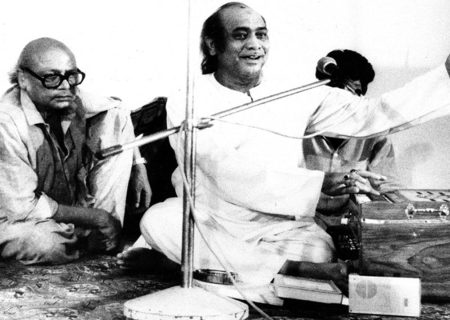
Verses Against Tyranny: Faiz, Habib Jalib, and the Poetic Architecture of Protest and Peace
Mohammad Taha Ali, research intern at center for migrant studies University of British Columbia Abstract This paper investigates the literary and political legacy of two of South Asia’s most recognizable Urdu poets, Faiz Ahmad Faiz and Habib Jalib, as the architects of a language of resistance that is anchored in the principles of justice, peace, […]
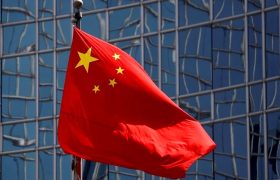
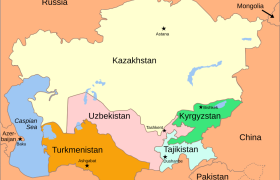

Why the Shanghai Cooperation Organization Was Absent in Kazakhstan
While each organization has an important role to play, the Collective Security Treaty Organization was much better suited to respond to upheaval in Kazakhstan. It was always likely to play a central role in the protests.

Iran and Eurasian Economic Union Negotiations: Upgrading EAEU-Iran Preferential Trade Agreement into a Free Trade Agreement
The Treaty on the Eurasian Economic Union (EAEU) was signed on 29 May 2014 by the leaders of Belarus, Kazakhstan, and Russia, and came into force on 1 January 2015. Treaties for Armenia's and Kyrgyzstan's accession to the EAEU were signed on 9 October and 23 December 2014, respectively.

EUROPE’S STRATEGIC NEED FOR DIVERSIFICATION OF GAS SUPPLY RESOURCES, ONWARD OPTIONS
Opinion: In the contemporary world, many and serious changes are taking place in the players and effective variables, resources and control methods in the field of international politics; but for the Europeans, limited access to diverse energy resources, as well as problems with safe and cheap access to resources such as gas, especially after it became clear that the tool could be used as a political lever, has made energy resources and their transfer lines into a very important and vital factor in the field of international politics and international security. In this regard, recent developments in oil and gas exporting countries have increased the importance of the issue. Mehdi Khorsand – Expert on Eurasia affairs

DIMENSIONS OF INTERNATIONAL SYSTEM CHANGE IN AFTERMATH OF UKRAINE WAR
Experts on Russia and international relations, in an expert session hosted by the Strategic Council on Foreign Relations, examined the dimensions of the change in the international system following the Ukraine war.

Iran’s Eastern Policy: Potential and Challenges
Since the 1979 Revolution, the foreign policy of the Islamic Republic of Iran has relied on the “Neither East nor West” motto. It was based on the Constitution of the Islamic Republic drafted amid the Cold War in the bipolar system and under the independent approach assumed by Iran’s newly established government.

OBJECTIVES, CONSEQUENCES OF SIGNING MOSCOW-BAKU DECLARATION ON ALLIED INTERACTION
Interview: An expert on international law stressed: Baku is concerned about the possibility of Russia recognizing the independence of the Karabakh region in coming years, and according to the Declaration on Allied Interaction, it gives guarantees to Russia so that Moscow will not implement the formula of supporting separatism in Karabakh and even in the Lezgian regions of northern Azerbaijan.

The 77th National Day of the People’s Republic of China and Beijing’s Developmental Trajectory Through 2026